
Trying to picture a measurement of 62 inches can be difficult when you only have a number in front of you. Inches are commonly used for furniture, clothing, screens, home projects, and many other everyday measurements, but a number alone does not always give you a clear visual idea.
A length of 62 inches equals 5 feet 2 inches, which is approximately 157.48 centimeters or 1.57 meters. That puts it a little over five feet in total length.
62 Inches at a Glance
How Long Is 62 Inches?
62 inches is equal to 157.48 centimeters, or approximately 5.17 feet. It is slightly more than five feet long and can be compared with several common household and everyday items.
62 inches is about 5 feet 2 inches long, making it roughly comparable to the height of a shorter adult or the length of some large furniture pieces.
Here is a quick breakdown:
| Unit | Equivalent |
| Inches | 62 inches |
| Feet | 5.17 feet |
| Feet & inches | 5 feet 2 inches |
| Centimeters | 157.48 cm |
| Meters | 1.5748 m |
| Millimeters | 1,574.8 mm |
| Yards | 1.72 yards |
The most useful everyday conversion is 5 feet 2 inches.
For metric measurements, remember that it is about 157.5 cm.
Converting 62 Inches Into Feet
There are 12 inches in one foot. Dividing 62 by 12 gives approximately 5.17 feet.
However, decimal feet are not usually the easiest format to visualize. Breaking the measurement into whole feet gives a much clearer answer:
- 5 feet = 60 inches
- Remaining length = 2 inches
- Total = 62 inches
Therefore, the measurement is 5 feet 2 inches.
That small two-inch difference beyond five feet can be useful when checking whether something will fit into a particular space.
Converting 62 Inches Into Centimeters
The standard conversion between inches and centimeters is straightforward: one inch equals 2.54 centimeters.
Multiplying 62 by 2.54 gives 157.48 cm.
So if a product lists its size in centimeters, a measurement of 157.48 cm corresponds exactly to the same length.
For simple everyday estimates, you can round this to about 157.5 cm.
Converting 62 Inches Into Meters
Because 100 centimeters make one meter, 157.48 centimeters can also be expressed as 1.5748 meters.
Rounded to two decimal places, that becomes 1.57 meters.
This makes it easier to compare the measurement with objects and spaces that are normally described in meters.
What Does This Length Look Like?
One of the best ways to understand an unfamiliar measurement is to compare it with objects that you already know.
The following examples are not intended to suggest that every version of these objects has exactly the same dimensions. Products differ between manufacturers and models, so use them as visual references rather than precise measuring instruments.
Related post: How Long Is 59 Inches? 9 Real-Life Examples to Visualize It
8 Different Objects to Help Visualize the Measurement
1. A Full-Length Curtain

A floor-length curtain panel can provide a useful vertical comparison. Depending on the style and room, some curtain panels are around five feet long or considerably longer.
Imagine a curtain measuring just over five feet from one end to the other. A panel around 62 inches would have a similar overall length.
Curtains are especially useful for visualizing measurements vertically because they stretch from a curtain rod toward the floor.
2. A Guitar
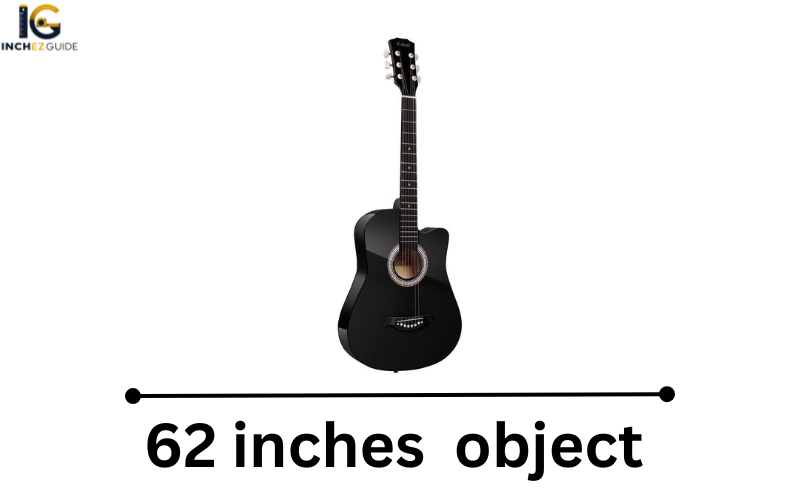
A full-size acoustic guitar is another familiar object that can help with scale.
Many guitars measure roughly 38 to 42 inches from end to end, so one guitar by itself is shorter than the measurement we’re considering. However, placing a guitar beside another long object makes the difference easier to appreciate.
A 62-inch length is significantly longer than a typical guitar, showing that the measurement extends well beyond the instrument’s overall body length.
3. A Standard Bathtub
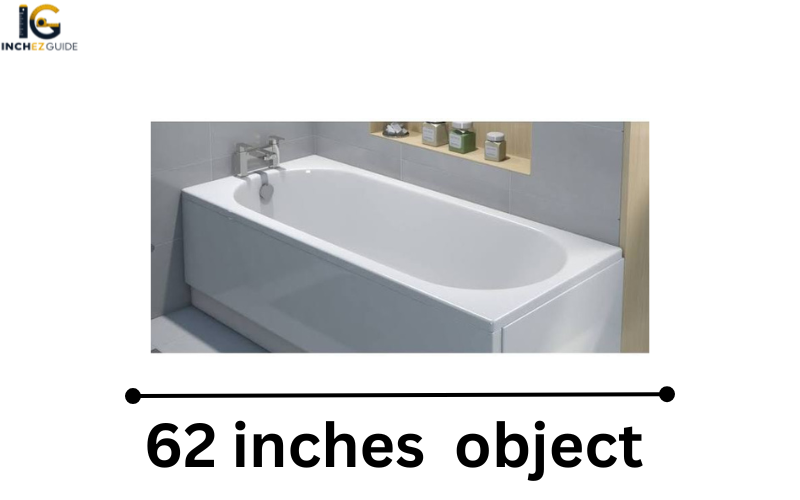
A standard residential bathtub can be around five feet long, with some models extending slightly beyond that.
A tub close to 62 inches gives an excellent horizontal reference because its length can occupy a substantial portion of a bathroom wall.
If you have seen a typical five-foot bathtub, imagine extending its length by another two inches. That gives you a rough mental picture.
4. A Large Area Rug

Some compact rectangular area rugs have one side measuring close to five feet.
A rug with a side around 62 inches would stretch more than five feet across the floor. This makes it a useful comparison when thinking about horizontal distances.
Unlike a narrow object, a rug also helps demonstrate how a measurement can occupy noticeable floor space.
5. A Tennis Net Post-to-Post Section
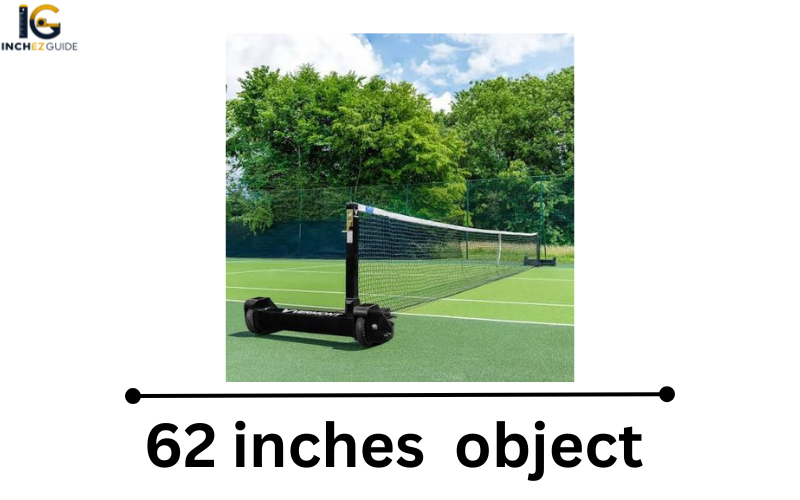
A tennis court provides a familiar visual environment for understanding distance, although its full dimensions are much larger.
A 62-inch segment would represent just over five feet of the court or net area. Thinking about the measurement as a small section of a much larger space can make the number easier to estimate.
This is particularly useful if you are more comfortable judging distances outdoors than indoors.
6. A Long Skateboard

Most skateboards are much shorter than 62 inches, but longboards can be considerably longer than standard skateboards.
A 62-inch length is longer than most individual skateboard decks. Placing several boards end to end would quickly demonstrate how much distance the measurement covers.
This example also emphasizes that 62 inches is a substantial length for a single narrow object.
7. A Children’s Slide

Small playground or backyard slides come in many sizes. Some compact models have a slide surface that can approach five feet in length.
A slide around this size gives you a useful visual comparison because it extends along a clearly defined path.
The actual overall dimensions vary considerably depending on whether the slide is designed for toddlers, older children, or playground equipment.
8. A Large Picture Frame

Large decorative frames can provide a useful vertical or horizontal comparison.
A frame measuring around 62 inches on its longest side would be quite substantial compared with an ordinary photo frame. It would take up a noticeable amount of wall space and could serve as a major decorative feature.
This is a good example of how a measurement that sounds abstract can translate into a visible object in a home.
How Tall Is 62 Inches for a Person?
When used to describe height, 62 inches equals 5 feet 2 inches.
This is one of the simplest ways to understand the measurement because you can picture a person standing upright.
The distance from the floor to the top of the person’s head would be 62 inches if their height is exactly 5 feet 2 inches.
Remember that this describes total height, not the distance from the floor to the person’s eyes, shoulders, or other body parts.
Is 62 Inches More Than 5 Feet?
Yes.
Five feet contains exactly 60 inches. The additional two inches bring the total to 62.
So the difference is small but measurable:
62 inches is 2 inches longer than 5 feet.
When measuring furniture or available space, those two extra inches can sometimes make a meaningful difference.
How Much Shorter Is It Than 6 Feet?
Six feet equals 72 inches.
Subtracting 62 from 72 gives a difference of 10 inches.
Therefore, this length is 10 inches shorter than six feet.
Another way to visualize it is to imagine a six-foot measuring tape. The final ten inches would extend beyond the 62-inch point.
Comparing 62 Inches With 1 Meter
One meter equals approximately 39.37 inches.
Because of this, 62 inches is substantially longer than one meter.
The difference is approximately 22.63 inches, meaning you would need more than half another meter to reach the full measurement.
In metric terms, the total is about 1.57 meters.
Comparing It With 60 Inches
Sixty inches is exactly five feet.
The measurement here is only two inches longer.
This makes 60 inches and 62 inches visually quite similar when viewed from a distance. However, if you are working on a project where measurements need to be exact, those two inches should not be ignored.
For example, a space that is exactly 60 inches wide may not accommodate an object that measures 62 inches.
How to Measure This Length Without a Tape Measure
If you do not have a measuring tape, you can create a rough estimate using a standard ruler.
A typical ruler is 12 inches long. Five rulers placed end to end would give you:
12 + 12 + 12 + 12 + 12 = 60 inches
You would then need to add another 2 inches.
Another useful reference is a sheet of US letter paper, which measures 11 inches along its longer side. Six sheets placed end to end would equal 66 inches, which is four inches more than the target.
These methods are suitable for visualization, but they should not replace an actual measuring tool when precision matters.
Where This Measurement Is Useful
Understanding this size can help in several everyday situations.
Furniture Planning
Before purchasing a table, cabinet, bench, or other large item, knowing the approximate physical size can help you judge whether it will fit your available space.
Home Improvement
DIY projects often require converting between inches, feet, and metric units. Having a clear understanding of the measurement can make planning easier.
Shopping Online
Online product listings may use different measurement systems. A product listed as 157.48 cm may initially look unfamiliar, but converting it into feet and inches gives you a more intuitive reference.
Decorating
Large mirrors, curtains, frames, rugs, and room dividers can take up considerable space. Comparing their dimensions with familiar measurements helps avoid surprises after purchase.
Quick Reference Table
| Conversion | Result |
| 62 inches in feet | 5.1667 ft |
| 62 inches in feet and inches | 5 ft 2 in |
| 62 inches in centimeters | 157.48 cm |
| 62 inches in meters | 1.5748 m |
| 62 inches in millimeters | 1,574.8 mm |
| 62 inches in yards | 1.7222 yd |
For everyday use, the three values worth remembering are:
5 feet 2 inches
157.48 centimeters
1.5748 meters
I hope this article was helpful for you. Visit More articles:
- How Big Is 7 Feet? Real-Life Size Comparisons Guide
- How Big Is 8 Feet? Real-Life Size Comparisons Guide
- How Big Is 9 Feet? Real-Life Size Comparisons Guide
- How Big Is 10 Feet? Real-Life Size Comparisons Guide
FAQs
How many feet are in 62 inches?
There are approximately 5.17 feet in 62 inches. In feet-and-inches format, the measurement is 5 feet 2 inches.
What is the centimeter equivalent?
The exact metric conversion is 157.48 centimeters.
Is 62 inches the same as 5 feet?
No. Five feet is 60 inches, so this measurement is 2 inches longer.
How many meters does it equal?
It equals 1.5748 meters, which rounds to about 1.57 meters.
Is it closer to 5 feet or 6 feet?
It is closer to 5 feet. It is only 2 inches beyond five feet but 10 inches below six feet.
Can I use everyday objects to estimate the length?
Yes. Objects such as curtains, bathtubs, folding screens, rugs, and large frames can help you develop a visual estimate. Their actual dimensions vary, however, so use them only as references.
How many millimeters are in the measurement?
There are 1,574.8 millimeters.
Is this a common height measurement?
Yes. Five feet two inches is a commonly used way to express a person’s height.
Related post: How Long Is 60 Inches? 8 Real-Life Examples to Visualize It
Conclusion
A measurement of 62 inches equals 5 feet 2 inches, 157.48 centimeters, or 1.5748 meters. While the number may not immediately give you a strong visual impression, comparing it with familiar objects makes the size much easier to understand.
A full-length curtain, bathtub, area rug, folding screen, kitchen counter section, or large picture frame can all provide useful visual references, although their exact dimensions vary.
For quick mental reference, simply remember that 60 inches equals five feet, and this measurement extends another two inches beyond that point. Once you have that reference in mind, it becomes much easier to estimate the size when shopping, decorating, planning a DIY project, or measuring household spaces.