
Understanding measurements can be difficult when all you see is a number. If you’ve ever looked at a product description and noticed a size listed as 40 mm, you may have wondered how big it actually is. Whether you’re buying a watch, comparing hardware sizes, choosing jewelry, or working on a DIY project, knowing the real-world size of 40 millimeters can help you make better decisions.
The good news is that 40 mm is a relatively easy measurement to visualize once you compare it with familiar objects.
While this conversion is useful, most people don’t naturally picture centimeters or millimeters in their minds. That’s why real-life examples are the best way to understand measurements.
In this guide, you’ll discover exactly how big 40 mm is, learn how it compares to everyday objects, explore common uses for this measurement, and find simple tricks for estimating it without a ruler.
What Does 40 MM Mean?
A millimeter is a unit of length in the metric system. It is commonly used throughout the world because it provides precise measurements for small objects.
Forty millimeters equals:
- 4 centimeters
- 1.57 inches
- 0.131 feet
- 0.043 yards
Although 40 mm sounds small, it is actually large enough to be easily seen and measured. It is a common size used in watches, tools, hardware, electronics, and household products.
For many people, 40 mm falls into the perfect middle ground. It isn’t tiny like 5 mm or 10 mm, but it isn’t large like 100 mm either.
How Big Is 40 MM Visually?
The easiest way to think about 40 mm is to imagine a length of 4 centimeters.
Most adults can comfortably see and measure a 40 mm object without difficulty. It is approximately:
- The width of two fingers placed together
- Slightly smaller than a golf ball’s diameter
- Similar to the width of many watch faces
- About the length of a large bottle cap
Because we encounter objects of this size every day, learning a few comparisons can make it much easier to estimate 40 mm without measuring tools.
8 Common Objects That Are About 40 MM In Size
1. A Standard Golf Ball
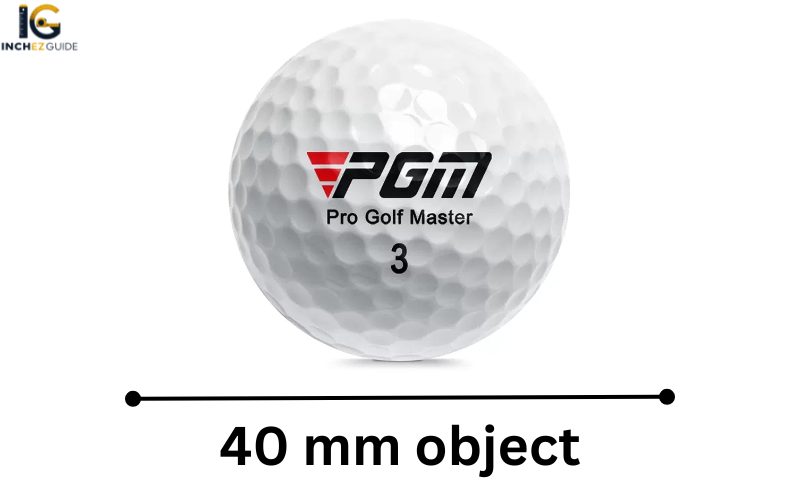
One of the easiest ways to understand how big 40 mm is involves a golf ball.
A regulation golf ball measures approximately 42.7 mm in diameter. This means it is only slightly larger than 40 mm.
If you’ve ever held a golf ball, you already have a very good idea of what 40 mm looks like. The difference of just a few millimeters is hardly noticeable to most people.
Golf balls are useful measurement references because their size remains standardized across manufacturers. This consistency makes them one of the most reliable everyday comparisons.
When visualizing 40 mm, simply imagine a golf ball that is slightly smaller than the standard size.
2. A Medium Watch Face
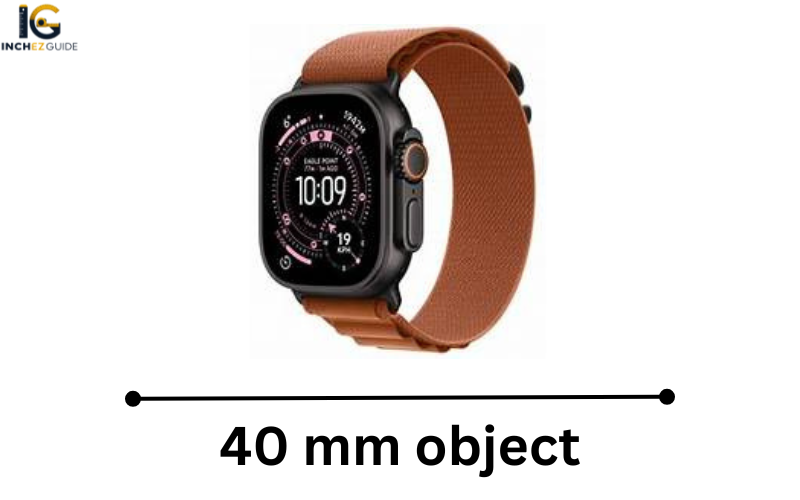
Many modern wristwatches feature a case diameter of approximately 40 mm.
In fact, 40 mm is considered one of the most popular watch sizes because it provides a balanced appearance without looking too large or too small.
If you wear watches regularly, a 40 mm watch face offers an excellent visual reference. It is large enough to display information clearly while remaining comfortable for everyday use.
Watch manufacturers frequently use this size because it suits a wide variety of wrist sizes and fashion styles.
For many people, imagining a watch face is the quickest way to picture 40 mm.
3. A Large Bottle Cap
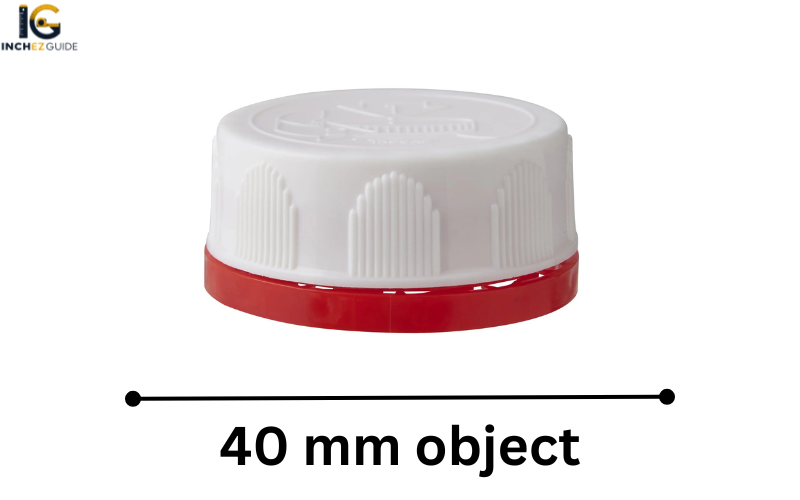
Many reusable water bottles and sports drink containers feature caps that measure close to 40 mm in diameter.
Bottle caps are convenient measurement references because they are found in almost every household.
While cap sizes vary depending on the manufacturer, many larger caps fall within a range that closely matches 40 mm.
The next time you pick up a reusable bottle, take a look at the cap. You may be surprised how close it is to this measurement.
4. Two Adult Fingers Side By Side
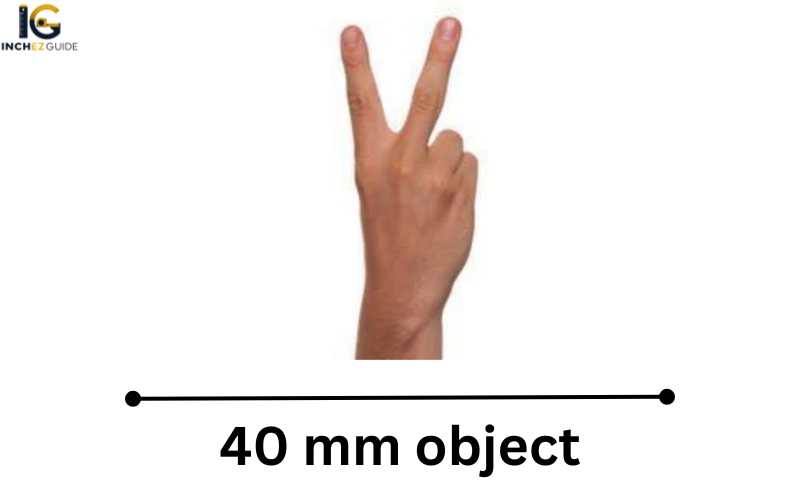
Your hands can provide surprisingly useful measurement references.
For many adults, placing two fingers side by side creates a width close to 40 mm.
Although finger sizes vary between individuals, this comparison offers a practical estimate when measuring tools are unavailable.
This method is particularly useful when shopping, traveling, or working on projects where precise measurements are not necessary.
Using your fingers as a reference helps you quickly visualize the size of 40 mm almost anywhere.
5. A Small Cookie
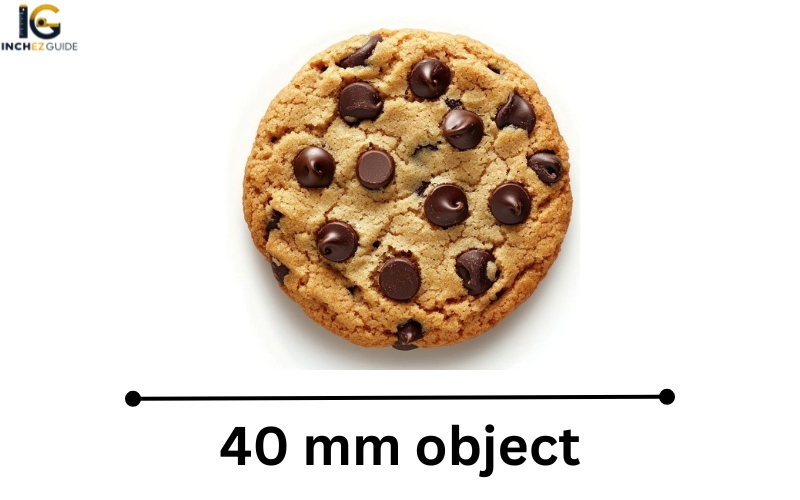
Many snack-sized cookies measure approximately 40 mm across.
Food items can be excellent size references because people interact with them frequently.
A small cookie about the size of an Oreo center or a bite-sized biscuit often falls near the 40 mm range.
When trying to picture 40 mm, imagine a cookie that comfortably fits into the palm of your hand.
This comparison makes the measurement feel more relatable and easier to remember.
6. A Car Key Fob
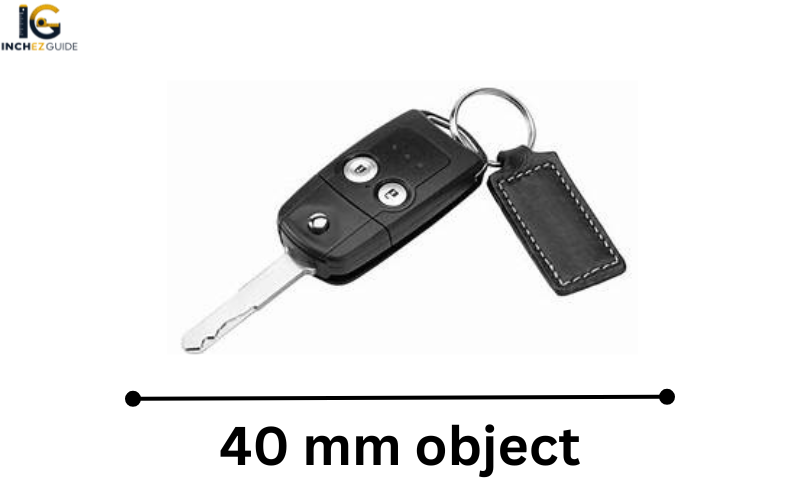
Modern vehicle key fobs often measure close to 40 mm in width.
Manufacturers design key fobs to fit comfortably in the hand while remaining compact enough for pockets and purses.
Many key fobs feature dimensions that closely resemble the size of 40 mm.
Since most people carry keys daily, this comparison provides another practical way to understand the measurement.
Looking at your car key fob can give you a surprisingly accurate visual estimate.
7. A Camera Lens Cap
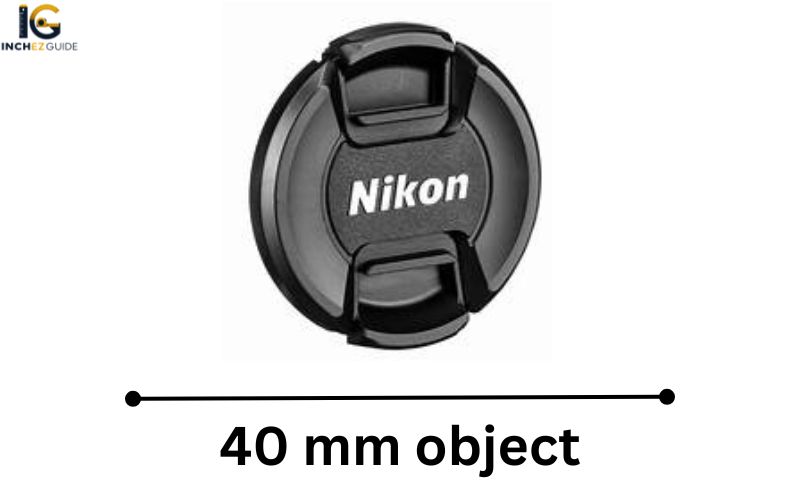
Small camera lens caps frequently measure around 40 mm in diameter.
Photography equipment uses millimeter measurements extensively because precision is important when designing lenses and accessories.
If you’ve ever used a camera, you may have noticed that many lens accessories are labeled in millimeters.
A compact lens cap provides a useful visual example of what 40 mm looks like in everyday life.
8. A Decorative Furniture Knob
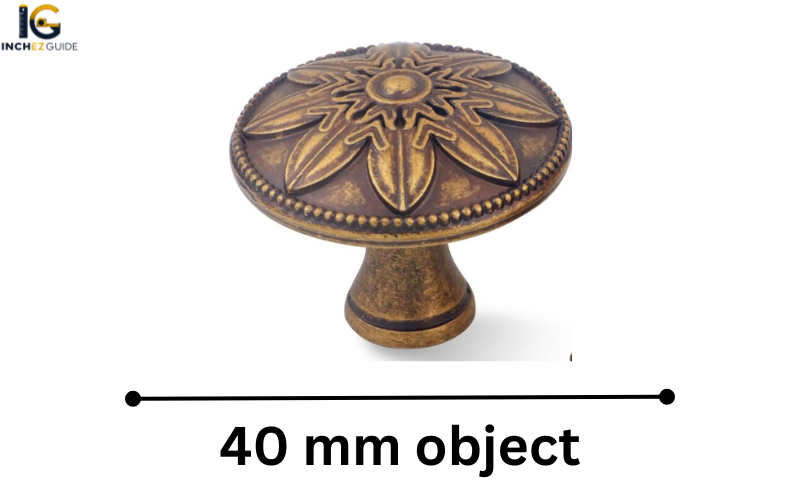
Many cabinet knobs and furniture handles measure approximately 40 mm across.
Home improvement products often use metric dimensions because they provide consistent sizing standards.
If you’ve replaced kitchen cabinet hardware before, you’ve probably handled knobs close to this size.
These decorative pieces offer another familiar object that can help you understand the actual dimensions of 40 mm.
Why Understanding 40 MM Matters
Many products list measurements in millimeters rather than inches.
Without understanding the actual size, it can be difficult to judge whether an item will meet your needs.
Knowing how big 40 mm is can help when:
- Buying watches
- Shopping online
- Selecting hardware
- Purchasing camera accessories
- Choosing jewelry
- Completing DIY projects
- Working on crafts
The more familiar you become with common measurements, the easier it becomes to evaluate products before making purchases.
How To Measure 40 MM Without A Ruler
You may not always have a ruler available.
Fortunately, there are several simple ways to estimate 40 mm.
Use A Watch Face
Many watch faces measure close to 40 mm.
Compare With A Golf Ball
A golf ball is slightly larger than 40 mm and provides an excellent reference.
Use Two Fingers
The combined width of two fingers often comes close to 40 mm.
Find A Bottle Cap
Many large bottle caps measure approximately 40 mm across.
These methods won’t provide exact measurements, but they can offer useful estimates when precision isn’t critical.
40 MM Conversion Chart
Understanding conversions can make metric measurements easier to visualize.
| Millimeters | Centimeters | Inches |
| 10 mm | 1 cm | 0.39 in |
| 20 mm | 2 cm | 0.79 in |
| 30 mm | 3 cm | 1.18 in |
| 40 mm | 4 cm | 1.57 in |
| 50 mm | 5 cm | 1.97 in |
| 60 mm | 6 cm | 2.36 in |
This chart makes it easy to compare 40 mm with other common measurements.
Is 40 MM Considered Large Or Small?
Whether 40 mm is considered large or small depends on what you’re measuring.
For Watches
40 mm is considered medium-sized and suitable for most people.
For Hardware
40 mm is relatively small compared to many construction materials.
For Jewelry
40 mm is often considered large.
For Electronics
40 mm is generally considered compact.
In most situations, 40 mm falls into the medium-size category.
Common Products Measured Around 40 MM
Many everyday items use dimensions close to 40 mm.
Examples include:
- Watch cases
- Bottle caps
- Camera accessories
- Decorative knobs
- Small toys
- Hardware components
- Sporting equipment
- Key fobs
Because it is such a practical size, 40 mm appears frequently in product specifications.
Easy Ways To Remember 40 MM
If you want to remember this measurement easily, connect it to familiar objects.
Think about:
- A golf ball
- A watch face
- Two fingers together
- A bottle cap
- A cabinet knob
The more objects you associate with 40 mm, the easier it becomes to estimate the size in everyday situations.
Common Mistakes When Estimating 40 MM
Many people make simple mistakes when working with millimeter measurements.
Confusing Millimeters And Centimeters
Some people mistakenly think 40 mm equals 40 cm.
In reality:
This means 40 mm equals only 4 cm.
Ignoring Product Dimensions
Product photos can be misleading.
Always check dimensions before making a purchase.
Forgetting Unit Conversions
Understanding how millimeters convert into centimeters and inches helps prevent sizing errors.
FAQs
How big is 40 mm in inches?
40 mm equals approximately 1.57 inches.
Is 40 mm the same as 4 cm?
Yes, 40 millimeters equals exactly 4 centimeters.
What object is close to 40 mm?
A golf ball, watch face, or large bottle cap are all close to 40 mm.
Is a 40 mm watch too big?
No. A 40 mm watch is considered a medium-sized watch and fits most wrists comfortably.
How can I estimate 40 mm without measuring tools?
You can use a golf ball, two fingers side by side, a watch face, or a bottle cap as references.
See Also: How Big Is 30 MM
Conclusion
Understanding how big 40 mm is becomes much easier when you compare it with everyday objects. Whether you picture a golf ball, a watch face, a bottle cap, or the width of two fingers, these comparisons provide a practical way to visualize the measurement.
The next time you see a product listed as 40 mm, you’ll have a much clearer understanding of its actual size. From shopping online to completing DIY projects, knowing this common measurement can help you make better decisions and estimate dimensions with confidence.