
Have you ever come across a product dimension listed as 20 mm and wondered how big it actually is? Whether you’re shopping online, comparing jewelry sizes, choosing hardware, or measuring everyday objects, understanding the actual size of 20 mm can help you make better decisions.
Many people find millimeters difficult to visualize because they are much smaller than inches and feet. While a measurement may look simple on paper, it often becomes easier to understand when compared with familiar objects that you see every day.
The simple answer is:
This means 20 mm is equal to 2 centimeters and slightly smaller than 1 inch.
In this guide, you’ll learn exactly how big 20 mm is through real-life examples, visual comparisons, conversion charts, practical uses, and easy ways to estimate it without a ruler.
What Does 20 MM Mean?
Millimeter is a metric unit of length used worldwide. It is one of the most common measurement units in engineering, construction, manufacturing, jewelry, and everyday products.
Twenty millimeters may sound small, but it is actually a noticeable size that appears in many objects around us.
Here are its equivalents:
- 20 millimeters
- 2 centimeters
- 0.787 inches
- 0.02 meters
Because millimeters provide greater precision than inches, they are often used for detailed measurements.
How Big Is 20 MM Visually?
The easiest way to understand 20 mm is by comparing it with objects you already know.
Twenty millimeters is approximately:
- Slightly smaller than 1 inch
- About the width of an adult fingernail
- Similar to a small coin diameter
- About the size of a medium shirt button
Instead of trying to imagine a ruler, visual references make it much easier to estimate measurements quickly.
8 Common Objects That Are About 20 MM
1. A Penny Coin
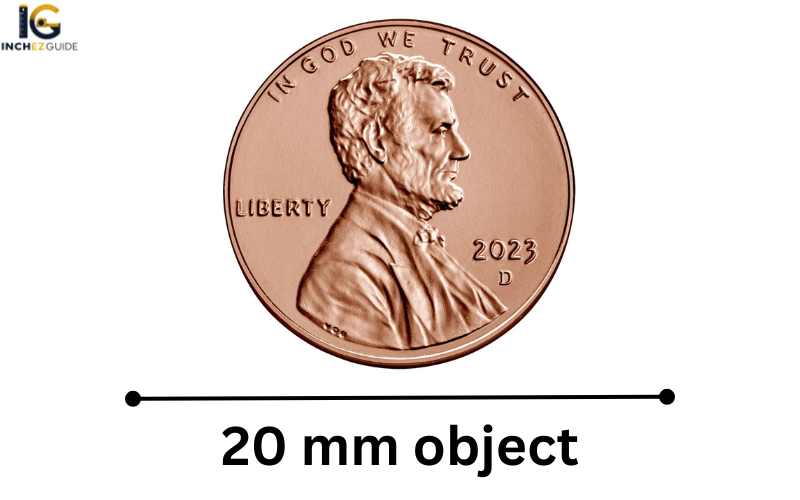
One of the easiest ways to visualize 20 mm is by looking at a penny-sized coin. Many coins around the world have diameters close to 20 mm.
Coins are useful references because they are manufactured to precise standards and are easy to find. If you hold a coin in your hand, you can quickly get a good understanding of how large 20 mm really is.
This comparison is especially useful when shopping online because many small products are described using millimeter measurements similar to coin diameters.
2. A Medium Shirt Button
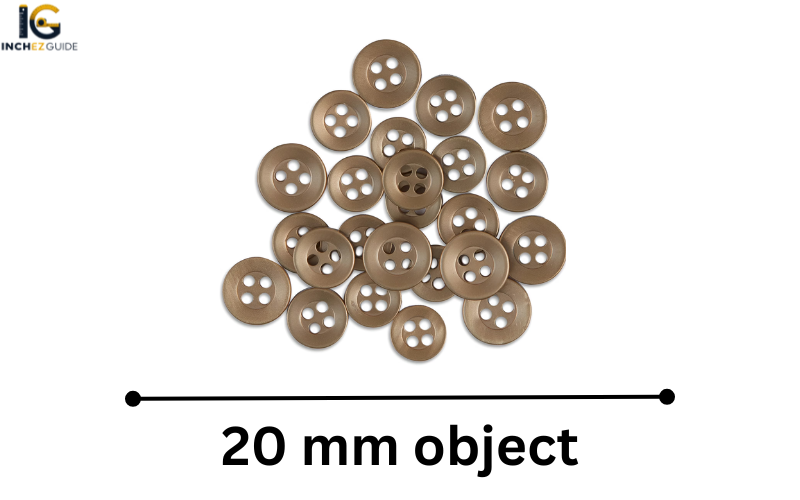
A standard medium-sized shirt button is often around 20 mm wide.
Buttons are common household objects that most people encounter daily. Because they come in relatively standard sizes, they provide a reliable visual reference.
If you’ve ever buttoned a dress shirt or casual shirt, the size of one of the larger buttons is very close to 20 mm. This makes it easier to picture the measurement without needing any tools.
3. The Width Of An Adult Fingernail
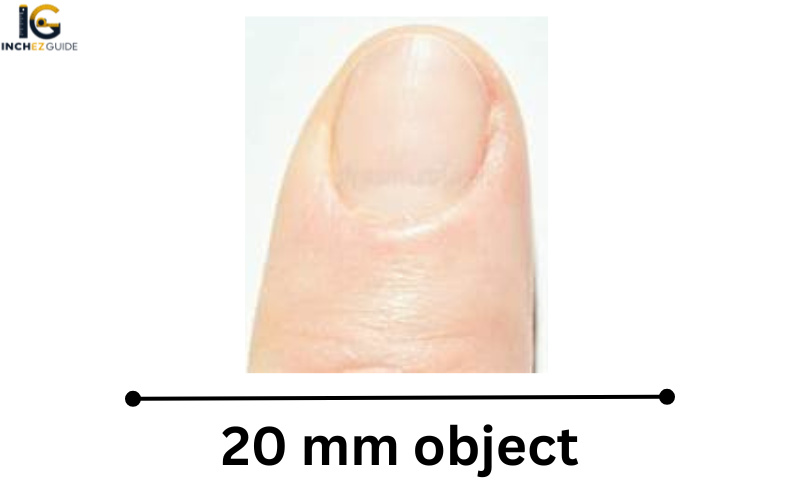
The width of an adult index fingernail is often close to 20 mm.
Although finger sizes vary from person to person, this comparison works surprisingly well for many adults.
Because your hand is always available, it provides one of the quickest methods for estimating 20 mm when you don’t have a ruler nearby.
Many people use hand-based measurements for rough estimations in everyday situations.
4. A Standard Marble
A typical toy marble often measures close to 20 mm in diameter.
Marbles are excellent visual examples because their size is easy to recognize and compare with other objects.
Children and collectors frequently handle marbles, making them a familiar reference point. If you can picture a standard marble, you can get a fairly accurate idea of what 20 mm looks like.
5. A Bottle Cap
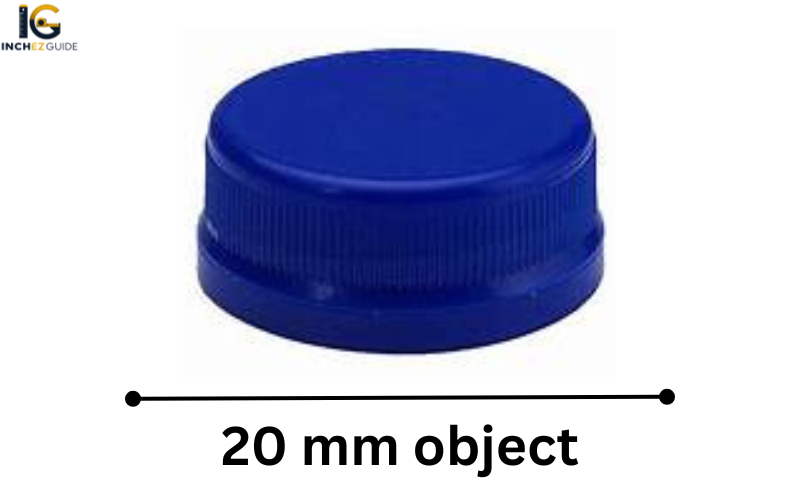
Many plastic beverage bottle caps measure approximately 20 mm across.
Although sizes vary slightly between brands, bottle caps remain one of the most accessible visual references for understanding millimeter measurements.
Their circular shape also helps create a better mental image of the diameter represented by 20 mm.
6. A Small Watch Face
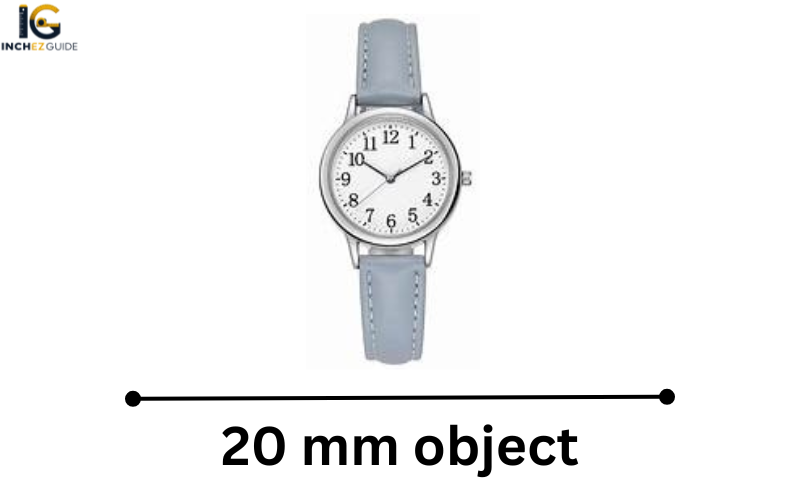
Compact watch faces often measure around 20 mm to 22 mm in diameter.
Watches are commonly measured using millimeters, making them one of the best examples for understanding metric dimensions.
If you’ve ever seen a small watch designed for children or a minimalist wristwatch, the face size is often very close to 20 mm.
7. A Large Tablet Pill
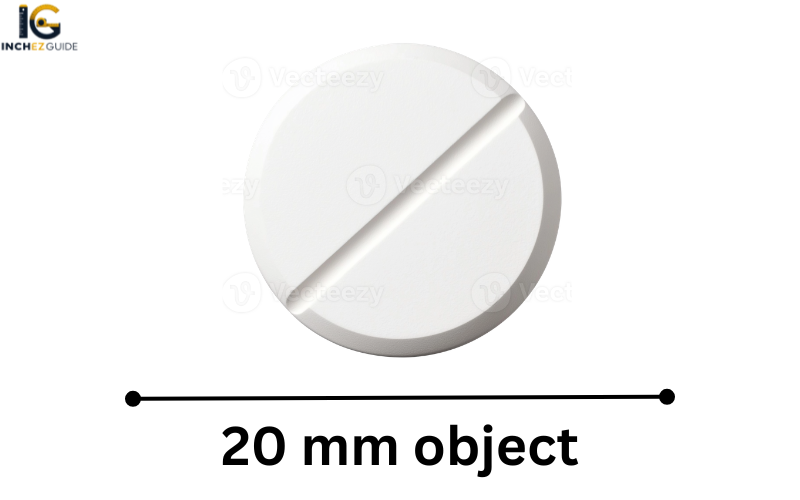
Many larger tablet medications are close to 20 mm long.
Medication sizes vary widely, but larger tablets provide a useful comparison for understanding small measurements.
This example is especially helpful because most people have seen pills of various sizes and can easily compare them mentally.
8. A Guitar Pick
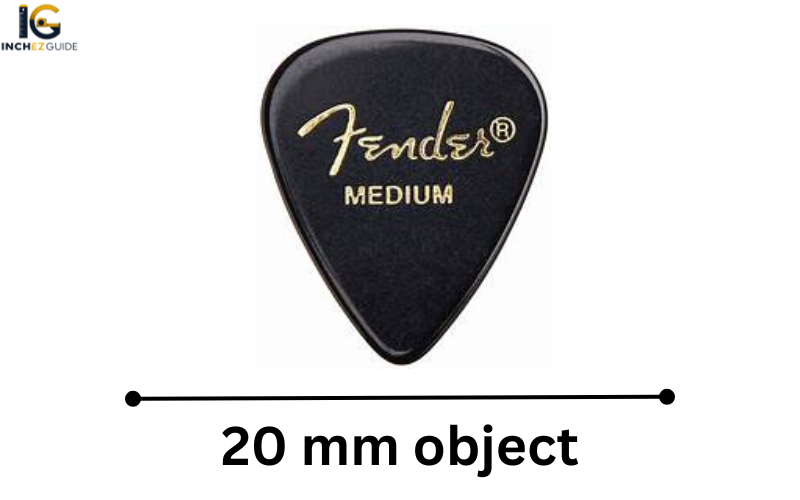
Some guitar picks have dimensions close to 20 mm on one side.
Musicians often work with equipment measured in millimeters, making guitar accessories useful examples.
The compact size of a guitar pick offers another familiar visual reference that helps explain how big 20 mm actually is.
Why Understanding 20 MM Matters
Knowing the actual size of 20 mm is useful in many real-world situations.
Online Shopping
Many online stores list product dimensions in millimeters.
Without understanding these measurements, it can be difficult to know whether an item is larger or smaller than expected.
This is particularly important when buying:
- Jewelry
- Electronics
- Watches
- Hardware
- Camera accessories
Understanding 20 mm helps reduce surprises when your order arrives.
Jewelry And Accessories
Jewelry dimensions are often listed in millimeters.
For example:
- Earrings
- Pendants
- Gemstones
- Charms
- Beads
A customer who understands what 20 mm looks like can make much better purchasing decisions.
DIY Projects
Woodworking and home improvement projects often require precise measurements.
Knowing how large 20 mm is can improve accuracy when selecting materials, drilling holes, or installing components.
Crafts And Hobbies
Crafting, sewing, model building, and 3D printing frequently involve millimeter measurements.
Understanding common dimensions improves precision and helps avoid costly mistakes.
How To Estimate 20 MM Without A Ruler
There are several ways to estimate 20 mm without a measuring tool.
Compare With A Coin
A coin close to 20 mm in diameter can provide a quick estimate.
Use Your Fingernail
The width of an adult fingernail is often similar to 20 mm.
Compare With A Button
Many shirt buttons provide a useful visual reference.
Use A Smartphone App
Modern smartphones offer measurement applications that can estimate object dimensions using the camera.
These methods are not perfect but can provide a reasonable approximation.
20 MM To Inches Conversion
Many people prefer working with inches rather than millimeters.
Here is a quick conversion chart.
| Millimeters | Inches |
| 5 mm | 0.197 in |
| 10 mm | 0.394 in |
| 15 mm | 0.591 in |
| 20 mm | 0.787 in |
| 25 mm | 0.984 in |
| 30 mm | 1.181 in |
This formula allows you to convert millimeters into inches quickly whenever needed.
20 MM Compared To Common Measurements
Sometimes comparing measurements side by side makes them easier to understand.
| Measurement | Equivalent |
| 20 mm | 2 cm |
| 20 mm | 0.787 inches |
| 20 mm | 0.02 meters |
| 20 mm | 0.0656 feet |
These conversions help bridge the gap between metric and imperial measurement systems.
Common Products That Use 20 MM Measurements
Many products use dimensions close to 20 mm.
Examples include:
- Watch bands
- Camera lens accessories
- Furniture hardware
- Drawer knobs
- Jewelry pendants
- Beads
- Electrical connectors
- Mechanical fasteners
Because 20 mm is a practical size, manufacturers frequently use it in product designs.
Why Millimeters Are Preferred For Precision
Millimeters provide more precise measurements than inches.
For example, engineers and manufacturers often need exact dimensions.
Instead of writing:
0.787 inches
They can simply write:
20 mm
This improves accuracy and reduces confusion.
That is why millimeters are widely used in:
- Engineering
- Manufacturing
- Medical equipment
- Product design
- Automotive industries
Easy Ways To Remember The Size Of 20 MM
If you want to remember what 20 mm looks like, connect it with familiar objects.
Think about:
- A shirt button
- A marble
- A bottle cap
- A coin
- Your fingernail width
These references make it easier to estimate measurements naturally.
After seeing these examples a few times, you’ll begin recognizing 20 mm instantly.
Common Mistakes People Make
Confusing Millimeters With Centimeters
One of the most common mistakes is assuming 20 mm equals 20 cm.
In reality:
Therefore, 20 mm equals only 2 cm.
Assuming It Is One Full Inch
Twenty millimeters is close to 1 inch but not exactly equal.
It is slightly smaller.
Ignoring Product Dimensions
Many buyers rely solely on photos when shopping online.
Photos can be misleading, making measurements much more important than images.
Professional Tools Used To Measure 20 MM
When precision matters, professionals use specialized measuring tools.
These include:
- Metric rulers
- Digital calipers
- Micrometers
- Measuring tapes
- Laser measuring devices
Such tools provide highly accurate measurements and eliminate guesswork.
Fun Facts About Millimeters
- One millimeter equals one-thousandth of a meter.
- Most countries use the metric system.
- Engineers often measure parts in fractions of a millimeter.
- Millimeters are commonly used in jewelry sizing.
- Camera lenses frequently use millimeter measurements.
FAQs
How big is 20 mm in inches?
20 mm equals approximately 0.787 inches.
Is 20 mm the same as 2 cm?
Yes. Twenty millimeters equals exactly 2 centimeters.
What object is about 20 mm wide?
A medium shirt button is often around 20 mm wide.
Is 20 mm close to 1 inch?
Yes. It is slightly smaller than 1 inch.
What is 20 mm commonly used for?
Twenty millimeters is commonly used in jewelry, watches, hardware, photography equipment, and manufacturing.
See Also: How Big Is 2 mm
Conclusion
Understanding how big 20 mm is becomes much easier when you compare it with familiar everyday objects. A penny-sized coin, shirt button, marble, bottle cap, fingernail, and small watch face all provide useful visual references.
Whether you’re shopping online, selecting jewelry, working on DIY projects, or simply trying to understand measurements better, knowing the actual size of 20 mm can help you make more accurate decisions. By using the examples and comparisons in this guide, you can confidently estimate and recognize 20 mm in everyday life.