
Have you ever seen a measurement of 100 feet and wondered how big it actually is? Whether you’re looking at a property listing, planning a construction project, reading about the height of a tree, or simply curious, it can be difficult to picture a 100-foot distance in your mind.
Most people hear measurements in feet regularly, but visualizing larger distances without a tape measure isn’t always easy. That’s where real-life comparisons become helpful.
The simple answer is:
100 feet=30.48 meters100\text{ feet} = 30.48\text{ meters}100 feet=30.48 meters
While that conversion is accurate, it still doesn’t provide a clear picture of how large 100 feet really is. Comparing it to familiar objects makes the measurement much easier to understand.
In this guide, you’ll discover exactly how big 100 feet is, see real-life examples that match this length, learn how to estimate it without a measuring tool, and understand where this measurement commonly appears in everyday life.
What Does 100 Feet Mean?
A foot is a unit of length used in the imperial measurement system. It is commonly used in the United States for measuring height, distance, buildings, land, and objects.
When you multiply one foot by 100, the resulting distance becomes surprisingly large.
100 feet equals:
- 30.48 meters
- 1,200 inches
- 33.33 yards
- 3,048 centimeters
100 feet=1,200 inches100\text{ feet} = 1,200\text{ inches}100 feet=1,200 inches
This distance is commonly used when measuring:
- Building heights
- Property dimensions
- Sports facilities
- Trees
- Construction projects
- Large vehicles
To understand this measurement better, let’s compare it with real-world objects.
How Big Is 100 Feet Visually?
A distance of 100 feet is longer than most people expect.
For example, it is longer than many residential lots, taller than most neighborhood buildings, and significantly longer than a row of several parked vehicles.
Imagine standing at one end of a 100-foot distance. A person standing at the opposite end would appear much farther away than you might initially think.
One of the easiest ways to visualize 100 feet is through familiar objects that closely match this measurement.
10 Common Things That Are About 100 Feet Long
1. Four School Buses Parked End To End
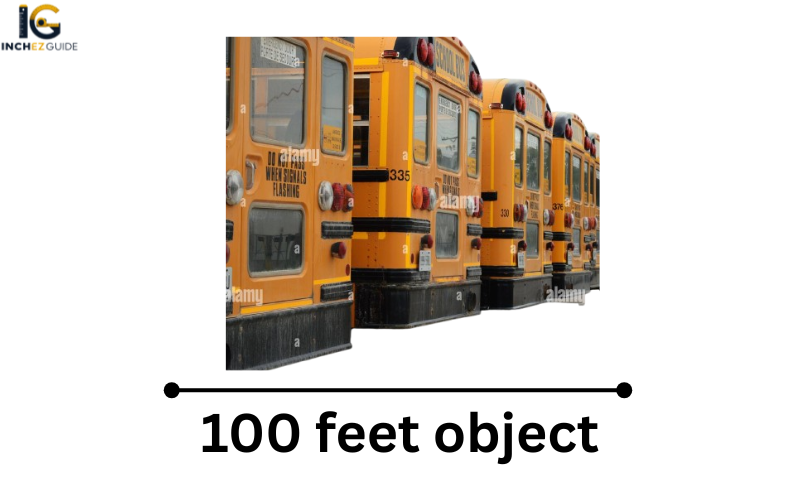
One of the easiest ways to picture 100 feet is by imagining four school buses lined up in a straight row.
A typical school bus measures around 25 feet long. When four buses are parked bumper-to-bumper, they create a combined length of approximately 100 feet.
Since school buses are familiar to most people, this comparison provides an excellent visual reference.
If you’ve ever stood next to a school bus, imagine multiplying that length by four. The result is surprisingly large and gives a realistic sense of what 100 feet looks like.
2. A 10-Story Building
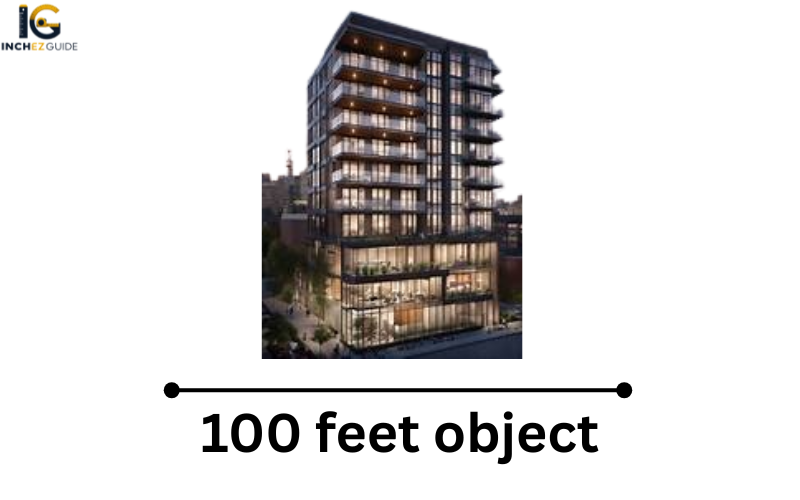
Many residential and office buildings that have 10 floors reach a height close to 100 feet.
The exact height depends on ceiling dimensions and building design, but a typical 10-story structure is often used as a comparison for 100 feet.
When standing beside a building of this size and looking upward, you gain a much better understanding of how large 100 feet truly is.
This comparison is especially useful because most people have seen buildings of this height in cities and urban areas.
3. Eight Average Cars Parked In A Row
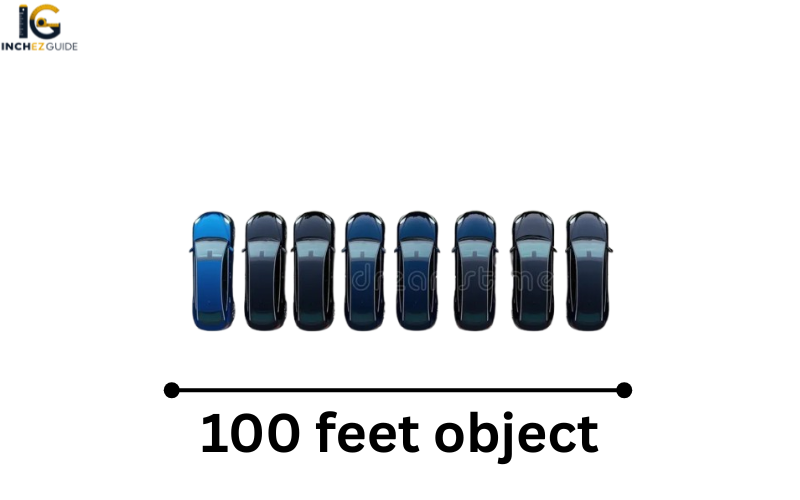
The average passenger car is approximately 12 to 13 feet long.
If you park eight average-sized cars bumper-to-bumper, their combined length will be close to 100 feet.
This comparison works particularly well because cars are part of daily life and are easy to visualize.
Next time you’re in a parking lot, imagine eight cars lined up in a straight row. That distance is very close to 100 feet.
4. One-Third Of A Football Field
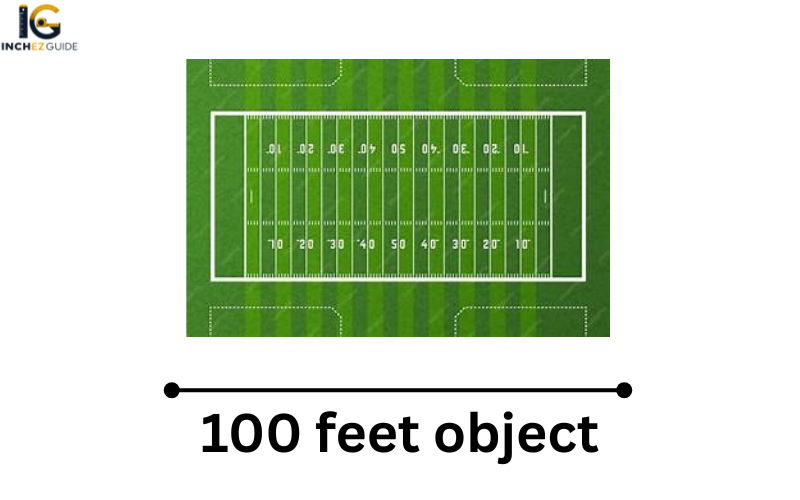
American football fields are among the most commonly used size comparisons.
A football field measures 300 feet between the goal lines.
That means 100 feet represents approximately one-third of the entire field length.
For sports fans, this is one of the easiest ways to estimate a 100-foot distance.
Imagine standing at one goal line and walking one-third of the field toward the opposite side. You’ve just covered about 100 feet.
5. A Large Blue Whale
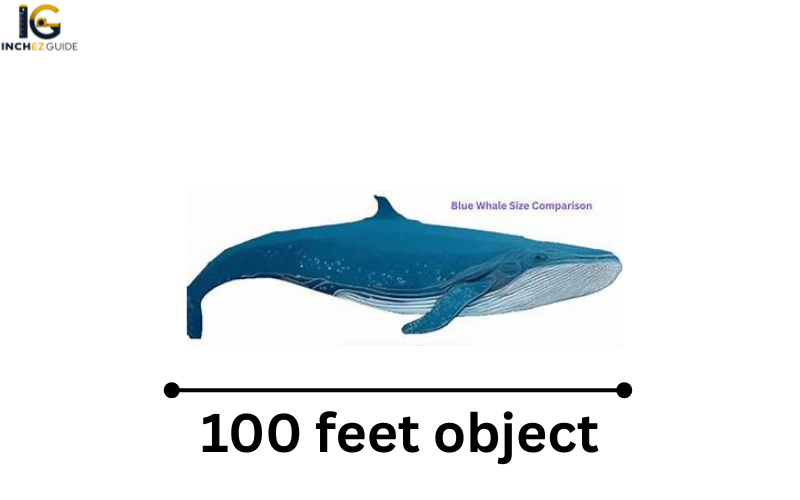
The blue whale is the largest animal known to have lived on Earth.
Some adult blue whales can reach lengths approaching 100 feet.
Although not every whale grows this large, the biggest specimens provide an excellent example of a 100-foot length.
Imagining a single animal stretching the length of a 10-story building highlights just how enormous both blue whales and 100 feet really are.
6. A Mature Redwood Tree
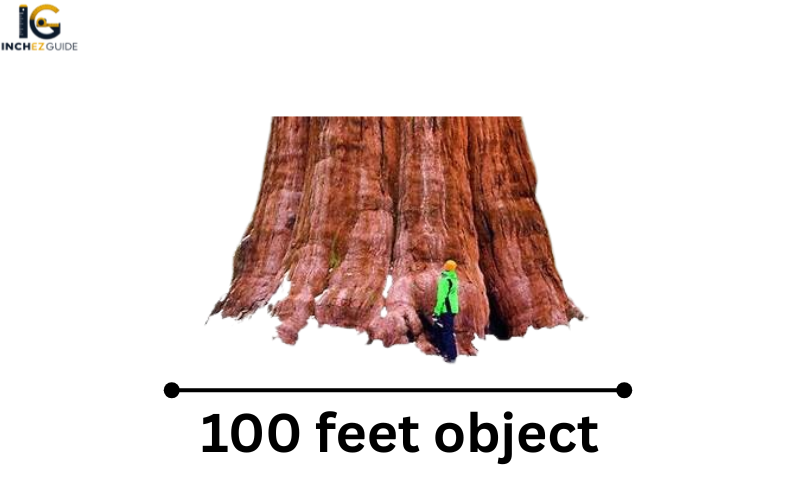
Redwood trees are among the tallest trees on the planet.
Many mature redwoods easily exceed 100 feet in height, while some reach over 300 feet.
A 100-foot redwood tree provides a natural example of this measurement.
Looking up at a tree this tall helps people understand how impressive a 100-foot height can be.
7. Two Tennis Courts Placed End To End
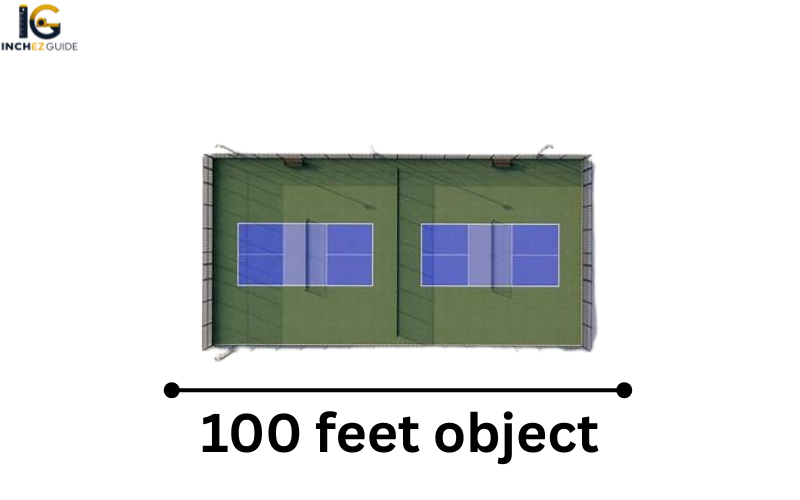
A standard tennis court measures 78 feet long.
If you combine two courts and account for some extra surrounding space, the total distance becomes close to 100 feet.
This comparison works well because tennis courts are designed using precise dimensions.
Many sports facilities provide a useful reference for understanding larger measurements.
8. A Commercial Airplane Wingspan
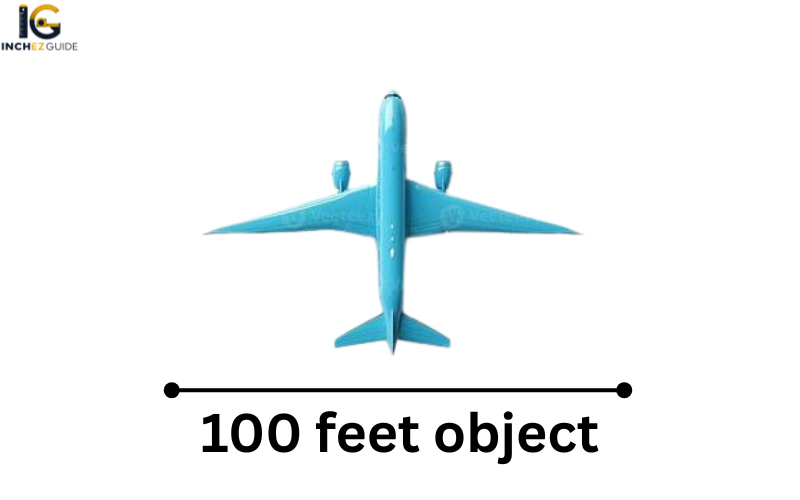
Several commercial aircraft have wingspans near 100 feet.
Regional passenger jets and smaller commercial airplanes often fit within this range.
When standing near an airplane at an airport, the distance from one wingtip to the other can give a strong visual representation of 100 feet.
Aircraft dimensions often surprise people because they are much larger than they appear from inside the cabin.
9. Five Pickup Trucks Parked In A Row
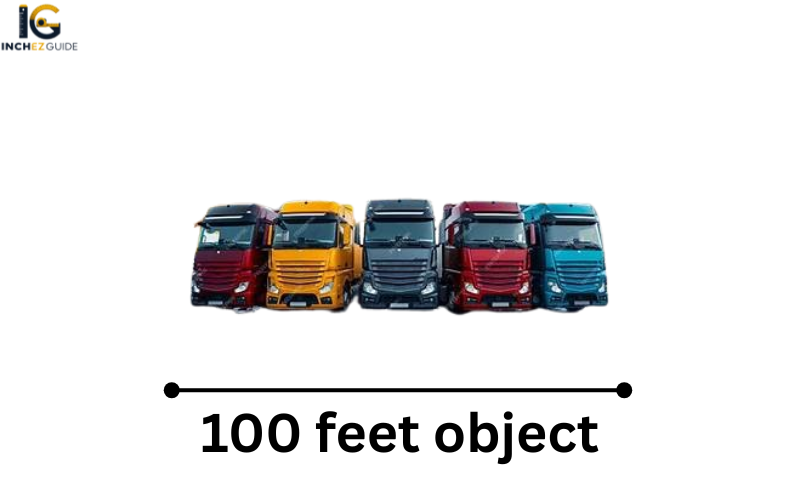
Most pickup trucks measure around 20 feet long.
When five pickup trucks are parked bumper-to-bumper, they create a combined length of roughly 100 feet.
Because pickup trucks are larger than standard cars, fewer vehicles are needed to reach the same distance.
This comparison is useful for visualizing 100 feet in parking lots and outdoor areas.
10. Three Telephone Poles
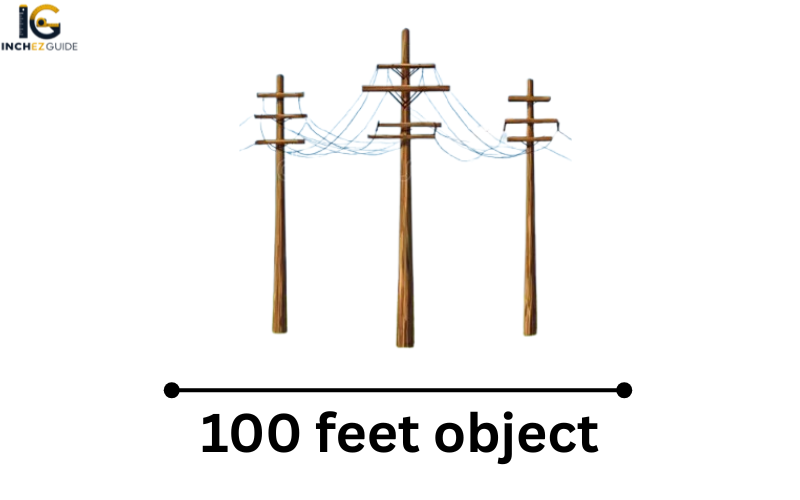
Telephone poles vary in height, but many utility poles stand between 30 and 40 feet tall.
Three average utility poles stacked end-to-end would measure close to 100 feet.
Since telephone poles are visible almost everywhere, they provide another practical reference point.
Looking at three poles in sequence helps create a mental image of a 100-foot distance.
Why Understanding 100 Feet Is Useful
Knowing how big 100 feet is can be surprisingly useful in daily life.
Real Estate
Property dimensions are often measured in feet.
Understanding a 100-foot lot depth helps buyers visualize available space before visiting a property.
Construction
Builders frequently use measurements around 100 feet when planning projects, laying foundations, and estimating materials.
Landscaping
Large gardens, fences, and outdoor projects often involve distances close to 100 feet.
Sports
Many sports facilities contain dimensions that can be compared to 100 feet, making visualization easier.
How To Measure 100 Feet Without A Tape Measure
You don’t always need measuring tools to estimate distance.
Count Your Steps
The average adult step is approximately 2.5 feet long.
Taking about 40 steps will cover close to 100 feet.
Use Vehicles
Eight average cars or five pickup trucks provide useful visual estimates.
Compare With Buildings
A 10-story building offers a reliable height comparison.
Use Sports Fields
One-third of a football field measures approximately 100 feet.
100 Feet Conversion Chart
| Measurement | Equivalent |
| 100 Feet | 30.48 Meters |
| 100 Feet | 1,200 Inches |
| 100 Feet | 33.33 Yards |
| 100 Feet | 3,048 Centimeters |
100 feet=33.33 yards100\text{ feet} = 33.33\text{ yards}100 feet=33.33 yards
Common Things Measured In 100 Feet
Many objects and structures are measured using distances close to 100 feet.
Examples include:
- Building heights
- Property boundaries
- Cell towers
- Large yachts
- Commercial structures
- Sports facilities
- Trees
- Utility installations
Understanding this distance helps make these measurements more meaningful.
FAQs
How many meters is 100 feet?
100 feet equals 30.48 meters.
How many inches are in 100 feet?
There are 1,200 inches in 100 feet.
How many cars equal 100 feet?
Approximately eight average cars parked bumper-to-bumper equal about 100 feet.
Is 100 feet taller than a house?
Yes. Most residential homes are significantly shorter than 100 feet.
How long does it take to walk 100 feet?
Most people can walk 100 feet in about 20 to 25 seconds.
What animal can reach 100 feet long?
Large blue whales can approach lengths of nearly 100 feet.
Is 100 feet bigger than one-third of a football field?
No. One-third of a football field is approximately 100 feet.
Can I estimate 100 feet by counting steps?
Yes. About 40 average adult steps equal roughly 100 feet.
See Also: How Big Is 90 Feet
Conclusion
Understanding how big 100 feet is becomes much easier when you compare it with familiar objects. Whether you picture four school buses parked end to end, a 10-story building, eight cars lined up in a row, or one-third of a football field, these comparisons provide a realistic sense of scale.
100 feet=30.48 meters100 { feet} = 30.48 { meters}100 feet=30.48 meters
From construction projects and property measurements to sports fields and natural landmarks, 100 feet is a distance that appears more often than many people realize. By using the real-life examples in this guide, you can now confidently visualize and estimate a 100-foot measurement whenever you encounter it.