
Have you ever come across a measurement of 2 mm and wondered how big it actually is? Since millimeters are very small units of measurement, it can be difficult to visualize their size without looking at a ruler. Whether you’re buying jewelry, choosing craft supplies, measuring screws, or comparing product dimensions online, understanding the size of 2 mm can help you make better decisions.
Many people underestimate how small 2 mm really is. While it may sound like a noticeable measurement, it is actually quite tiny. However, once you compare it to everyday objects, it becomes much easier to understand.
The simplest way to describe it is:
Although this conversion is accurate, most people find real-world comparisons more useful than numbers. That’s why this guide focuses on familiar objects and practical examples that help you visualize 2 mm instantly.
In this article, you’ll learn what 2 mm means, how it compares to common objects, where this measurement is used, and how to estimate it without a ruler.
What Does 2 mm Mean?
A millimeter is a unit of length in the metric system. It is one of the smallest units commonly used in everyday measurements.
Two millimeters equals:
- 0.2 centimeters
- 0.0787 inches
- 2,000 micrometers
- 0.002 meters
Millimeters are often used when precision matters. Engineers, jewelers, designers, dentists, manufacturers, and craftspeople frequently work with millimeter measurements because they allow for accurate sizing.
Even though 2 mm is small, it can make a significant difference in many applications. For example, a 2 mm change in jewelry stone size can dramatically alter appearance, while a 2 mm gap in construction may affect how parts fit together.
How Big Is 2 mm Visually?
When looking at a ruler, 2 mm covers only two tiny marks.
To help visualize it better:
- It is about the width of a sesame seed.
- It is slightly thicker than a credit card.
- It is about the diameter of some jewelry beads.
- It is close to the thickness of stacked paper sheets.
Because the measurement is so small, comparing it with everyday objects is often the easiest way to understand it.
8 Common Objects That Are About 2 mm In Size
1. Sesame Seed
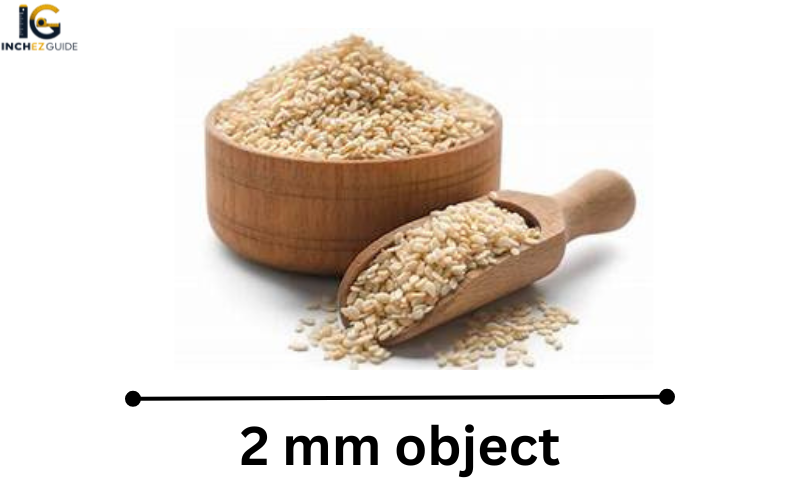
A sesame seed is one of the best examples of something close to 2 mm in size.
These tiny seeds are commonly found on hamburger buns, bread, and baked goods. Most sesame seeds measure approximately 2 to 3 millimeters long, making them an excellent visual reference.
The next time you eat a burger, take a closer look at the seeds on top. Their size provides a surprisingly accurate representation of what 2 mm looks like.
Because sesame seeds are familiar to most people, they are often one of the easiest objects to use when imagining very small measurements.
2. Mechanical Pencil Lead
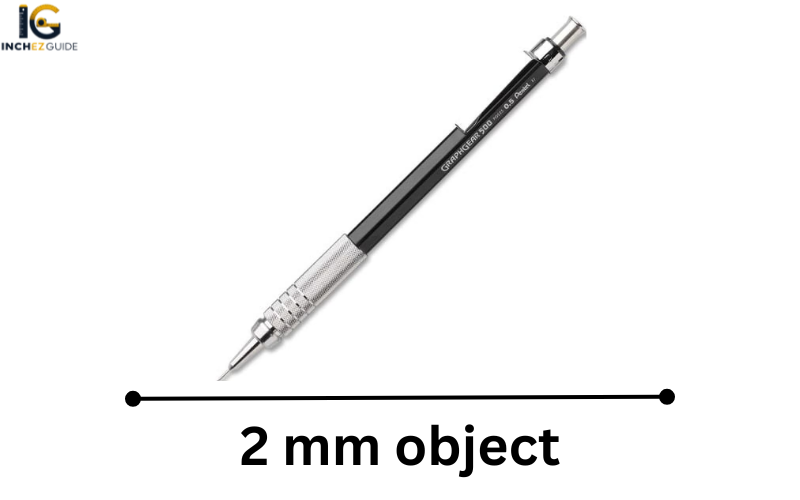
Some drafting and sketching pencils use 2 mm lead.
Unlike standard mechanical pencils that use very thin lead, specialized drafting pencils often contain thicker 2 mm lead for drawing and technical work.
If you’ve ever used an artist’s lead holder, the diameter of the lead itself is almost exactly 2 mm.
This makes it one of the most accurate everyday examples available.
3. Small Jewelry Beads
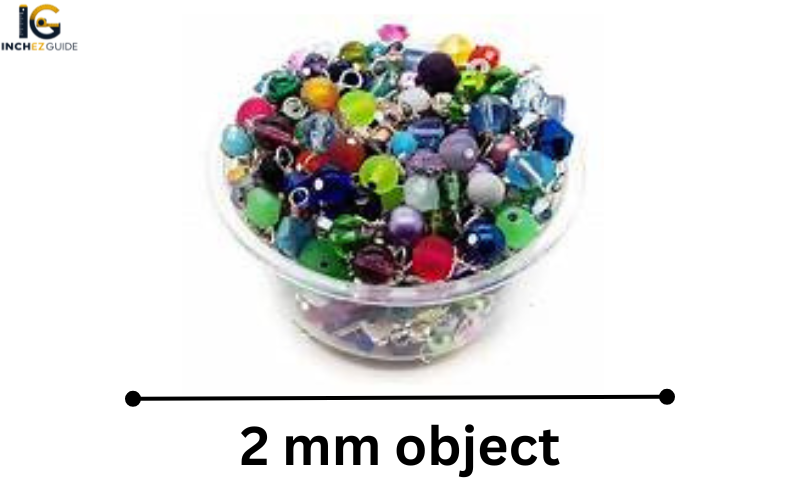
Tiny jewelry beads frequently measure 2 mm in diameter.
These miniature beads are commonly used in bracelets, necklaces, earrings, and decorative accessories.
Because jewelry sizing is usually measured in millimeters, understanding what a 2 mm bead looks like can be helpful when shopping online.
Although a 2 mm bead may appear tiny on paper, multiple beads together can create beautiful and detailed jewelry designs.
4. Coarse Salt Crystal
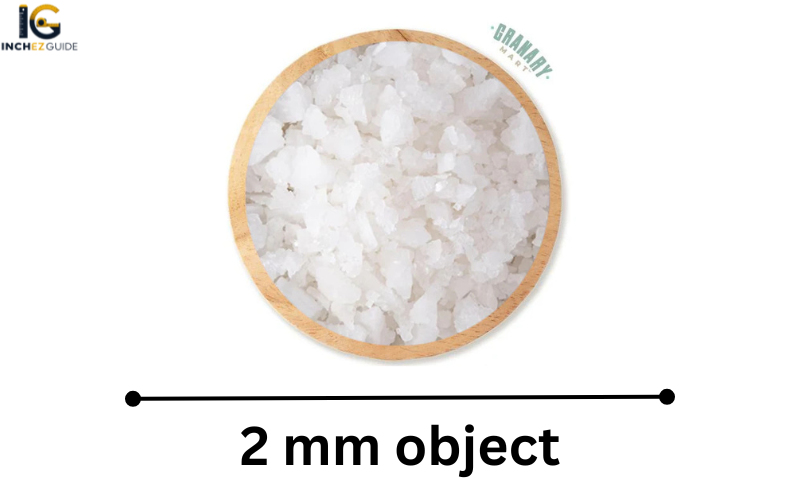
Some coarse salt crystals are close to 2 mm wide.
While table salt grains are much smaller, larger gourmet salts often contain crystals that measure around 2 mm.
Kitchen ingredients can sometimes provide useful size references because they are readily available in most homes.
Examining a coarse salt crystal up close can help you appreciate how small yet visible 2 mm really is.
5. Thickness Of Three Credit Cards
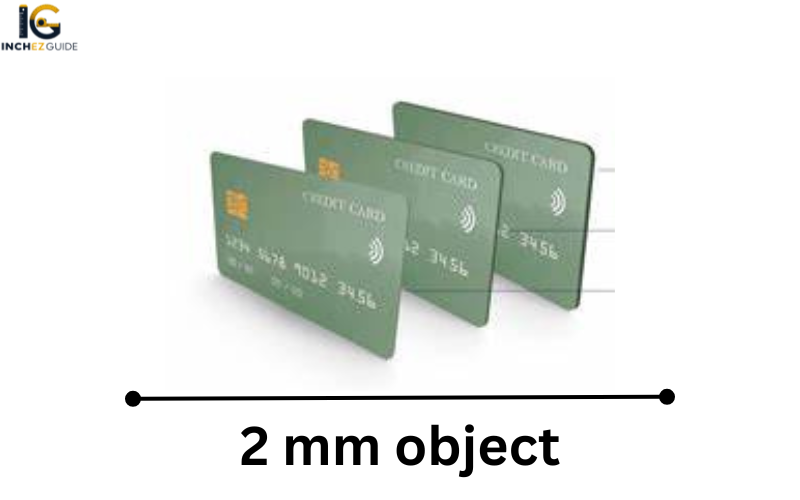
A standard credit card has a thickness of approximately 0.76 mm.
When you stack three credit cards together, the total thickness becomes slightly over 2 mm.
This comparison helps people understand thickness rather than width or length.
Since most adults carry cards daily, this is one of the most practical ways to visualize 2 mm.
6. Small Electronic Screw
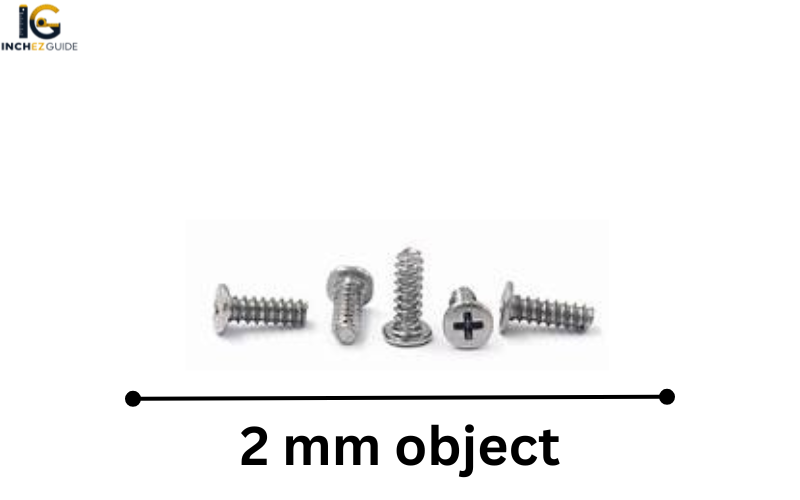
Many tiny screws found in electronics have diameters close to 2 mm.
Smartphones, eyeglasses, watches, laptops, and cameras often use miniature screws that measure approximately 2 mm across.
These screws may seem insignificant, but they play an important role in holding complex devices together.
Their small size highlights how precise millimeter measurements can be.
7. Tiny Craft Beads
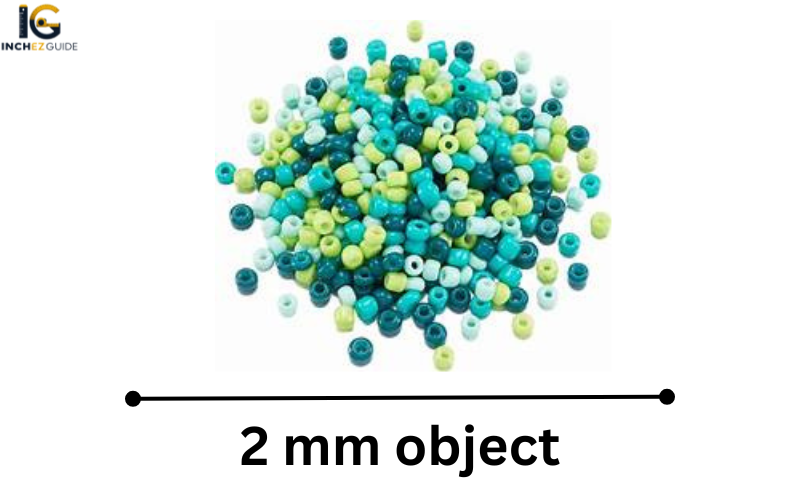
Craft stores sell numerous beads that measure around 2 mm.
These beads are frequently used for embroidery, decorative projects, and detailed handmade artwork.
Because craft supplies are manufactured with standardized dimensions, they offer reliable measurement references.
A handful of 2 mm craft beads demonstrates how small this measurement really is.
8. Mustard Seed
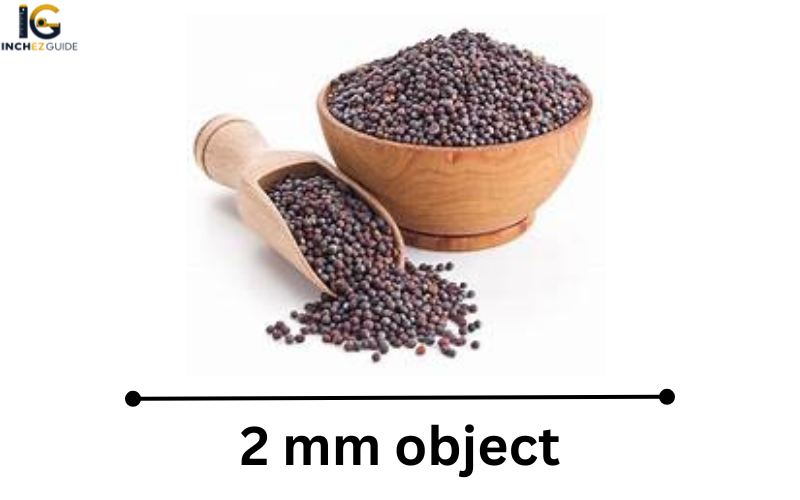
Many mustard seeds measure close to 2 mm in diameter.
Although exact sizes vary depending on the variety, mustard seeds are another excellent everyday example.
They are commonly used in cooking and spice blends, making them easy to find in kitchens worldwide.
Their size helps reinforce how small but visible a 2 mm object can be.
Why Understanding 2 mm Is Important
Many products use millimeter measurements because they offer greater precision than larger units.
Jewelry Shopping
Jewelry dimensions are often listed in millimeters.
Knowing the size of a 2 mm gemstone or bead can help you avoid surprises when shopping online.
Electronics
Many electronic components, screws, connectors, and wires use millimeter measurements.
Understanding small dimensions helps when repairing or upgrading devices.
Construction
Builders often work with millimeter tolerances to ensure proper alignment and fit.
A difference of only 2 mm can affect the quality of a finished project.
Crafts And DIY Projects
Craft projects frequently require accurate measurements for cutting, drilling, and assembling materials.
Knowing the size of 2 mm helps improve precision.
How To Measure 2 mm Without A Ruler
If you don’t have a ruler available, several common items can help estimate 2 mm.
Compare With A Sesame Seed
A sesame seed provides one of the easiest visual references.
Use A 2 mm Pencil Lead
Artists often use lead holders with 2 mm lead.
Look At Jewelry Beads
Many small beads measure approximately 2 mm.
Compare With Credit Cards
Three stacked cards create a thickness close to 2 mm.
These comparisons are not perfectly exact, but they can provide a useful estimate.
2 mm Conversion Chart
Understanding conversions can make measurements easier.
| Measurement | Equivalent |
| 2 mm | 0.2 cm |
| 2 mm | 0.0787 inches |
| 2 mm | 2000 micrometers |
| 2 mm | 0.002 meters |
This chart helps compare millimeters with other common units.
How Small Is 2 mm Compared To Other Measurements?
Comparing 2 mm to other familiar measurements provides useful perspective.
| Measurement | Comparison |
| 1 mm | Half of 2 mm |
| 2 mm | Standard reference |
| 5 mm | More than twice as large |
| 10 mm | Equal to 1 cm |
| 25.4 mm | Equal to 1 inch |
Although 2 mm is tiny, it remains large enough to see clearly with the naked eye.
Common Things Measured In Millimeters
Millimeters are used for countless products and materials.
Examples include:
- Jewelry stones
- Watch components
- Eyeglass screws
- Wire thickness
- Drill bits
- Camera parts
- Medical devices
- Electronic components
- Craft supplies
- Mechanical parts
Because millimeters offer precision, they are preferred whenever small dimensions matter.
Is 2 mm Visible To The Naked Eye?
Yes, absolutely.
A 2 mm object is easy to see without magnification.
In fact, many insects, seeds, beads, and small components are around this size.
While examining fine details may require a magnifying glass, the object itself remains clearly visible.
This makes 2 mm a practical size for many products that need to be small but still noticeable.
Easy Ways To Remember The Size Of 2 mm
If you want to remember what 2 mm looks like, try associating it with common objects.
Useful references include:
- Sesame seed
- Mustard seed
- Jewelry bead
- Mechanical pencil lead
- Electronic screw
- Coarse salt crystal
Repeatedly comparing measurements with these objects helps build a strong visual understanding over time.
Common Mistakes When Estimating 2 mm
Confusing Millimeters And Centimeters
Many people mistakenly think 2 mm equals 2 cm.
In reality, 2 centimeters is ten times larger.
Underestimating Small Measurements
People often assume 2 mm is almost invisible, but it can be seen easily.
Ignoring Precision
In industries like jewelry, medicine, and engineering, even a 1 mm difference can be important.
Accurate measurement matters more than many people realize.
Professional Tools Used To Measure 2 mm
Professionals use specialized tools to measure small dimensions accurately.
Common tools include:
- Digital calipers
- Micrometers
- Precision rulers
- Engineering gauges
- Vernier calipers
These tools provide measurements that are far more accurate than visual estimates.
Fun Facts About Millimeters
- There are 10 millimeters in one centimeter.
- There are 1,000 millimeters in one meter.
- Engineers often prefer millimeters over centimeters.
- Millimeters are used worldwide in science and manufacturing.
- Most technical drawings use millimeter measurements.
FAQs
How big is 2 mm in inches?
2 mm equals approximately 0.0787 inches.
What object is closest to 2 mm?
A sesame seed is one of the closest everyday examples.
Is 2 mm thick?
Yes, but it is still considered very thin.
Can you see 2 mm without a microscope?
Yes. A 2 mm object is clearly visible to the naked eye.
Is 2 mm bigger than 1 mm?
Yes. It is exactly twice as large.
How many millimeters are in a centimeter?
There are 10 millimeters in 1 centimeter.
Is 2 mm used in jewelry?
Yes. Beads, gemstones, and chain components are often measured in millimeters.
See Also: How Big Is 120 Feet
Conclusion
Understanding how big 2 mm is becomes much easier when you compare it to familiar objects. Everyday items such as sesame seeds, mustard seeds, jewelry beads, pencil lead, and electronic screws provide excellent visual references that make this tiny measurement easier to imagine.
Although 2 mm is a very small measurement, it plays an important role in jewelry making, electronics, engineering, construction, crafting, and countless other industries. Even a difference of just a few millimeters can affect the appearance, fit, or performance of a product.
By using the examples, comparisons, and conversion charts in this guide, you can now confidently estimate and recognize the size of 2 mm in everyday life.