
Have you ever seen a measurement of 110 feet and wondered how large it actually is? While numbers can tell us the exact length of something, they do not always help us picture its real-world size. Whether you’re reading property dimensions, planning a construction project, measuring a large object, or simply satisfying your curiosity, understanding what 110 feet looks like can be surprisingly difficult.
The good news is that you do not need a measuring tape to visualize this distance. By comparing 110 feet to familiar objects and structures, you can quickly develop a clear mental picture of its size.
The simple answer is:
110 feet=33.53 meters110 { feet} = 33.53 { meters}110 feet=33.53 meters
That means 110 feet is longer than many homes, taller than an average 10-story building, and roughly one-third the length of a football field.
In this guide, you’ll discover eight real-life examples that are about 110 feet long, learn useful conversions, and understand why this measurement appears so often in construction, real estate, sports, and engineering.
How Long Is 110 Feet In Other Units?
Before looking at visual comparisons, it helps to see how 110 feet converts into other common measurement units.
| Measurement Unit | Equivalent |
| Feet | 110 ft |
| Inches | 1,320 in |
| Yards | 36.67 yd |
| Meters | 33.53 m |
| Centimeters | 3,352.8 cm |
110 feet=1320 inches110\text{ feet} = 1320\text{ inches}110 feet=1320 inches
For people familiar with the metric system, 33.53 meters provides a useful reference point. However, most people find real-life object comparisons much easier to understand.
8 Things That Are About 110 Feet Long
1. Three School Buses Parked End To End
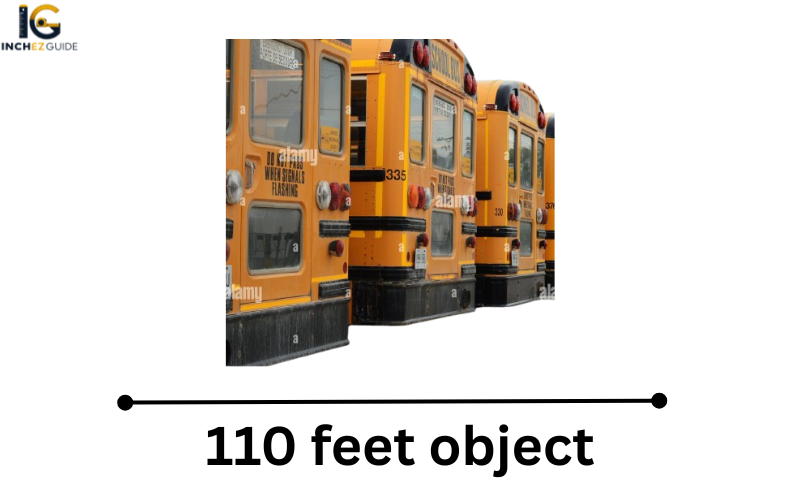
One of the easiest ways to visualize 110 feet is by imagining three school buses parked in a straight line.
A standard school bus is usually between 35 and 40 feet long. If you place three buses bumper to bumper, their combined length comes very close to 110 feet.
Most people have seen school buses countless times, which makes this comparison particularly effective. Standing next to three buses lined up together immediately shows how substantial 110 feet really is. The distance stretches much farther than many people expect.
This comparison is useful because school buses are common and their size is easy to remember. If you can picture three buses extending down a street, you already have a good idea of how long 110 feet is.
For many people, this is one of the most practical visual references for understanding large measurements.
2. An 11-Story Building
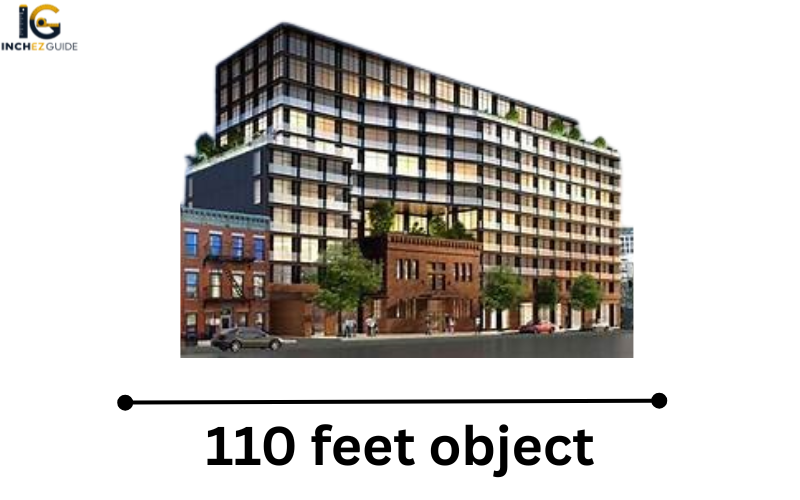
Another excellent way to understand 110 feet is by imagining the height of an 11-story building.
Most modern commercial and residential buildings average about 10 feet per story. When you multiply that by 11 floors, you get approximately 110 feet.
If you’ve ever stood at the base of an apartment building or hotel and looked up, you know how impressive that height can seem. An 11-story structure stands significantly above most homes and smaller commercial buildings.
This comparison helps you understand 110 feet vertically rather than horizontally. While the measurement remains exactly the same, seeing it as building height often makes the scale feel even larger.
In many towns and cities, an 11-story building is visible from a considerable distance, demonstrating just how substantial 110 feet truly is.
3. One-Third Of A Football Field
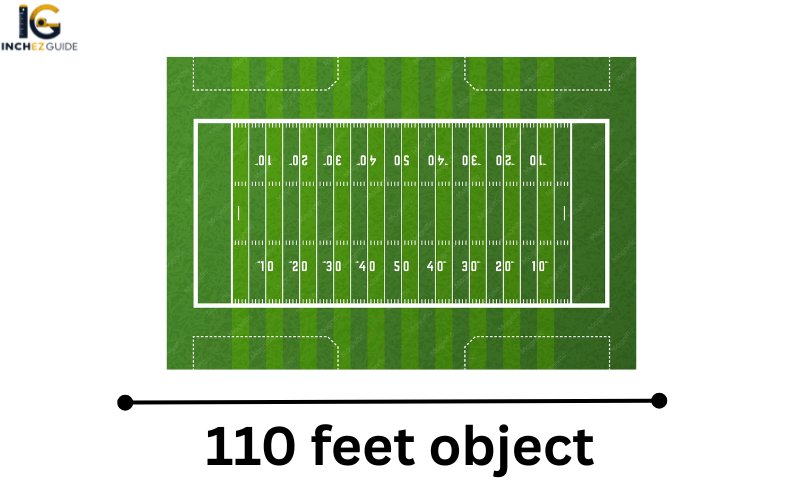
Football fields provide one of the best large-scale measurement references because many people are already familiar with their size.
A regulation football field measures 360 feet from one end zone to the other. Since 110 feet is approximately one-third of that total distance, you can imagine walking about one-third of the field’s length.
If you’ve attended a football game or watched one on television, this comparison can instantly make the measurement easier to visualize.
Standing at one end zone and walking toward midfield for about one-third of the field provides a realistic sense of how far 110 feet extends.
Because sports fields are designed using precise measurements, they offer reliable comparisons that help turn abstract numbers into something much easier to understand.
4. Eleven Adult Giraffes Standing Nose To Tail
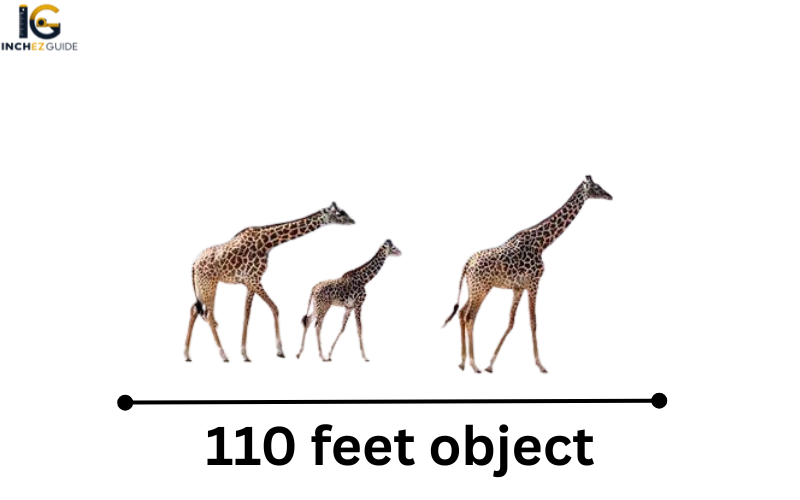
For a more unusual comparison, imagine eleven adult giraffes standing in a straight line.
An adult giraffe can reach a body length of around 10 feet from nose to tail. If eleven giraffes stood one behind another, the combined length would be roughly 110 feet.
This comparison is especially memorable because giraffes are among the tallest animals on Earth. Most people are familiar with their impressive size, even if they have only seen them in photographs or at zoos.
Visualizing eleven giraffes lined up together creates a striking image that highlights the scale of 110 feet in a fun and engaging way.
Large animal comparisons are often useful because they help people connect measurements to real-world objects they already recognize.
5. A Large Passenger Airplane Wingspan
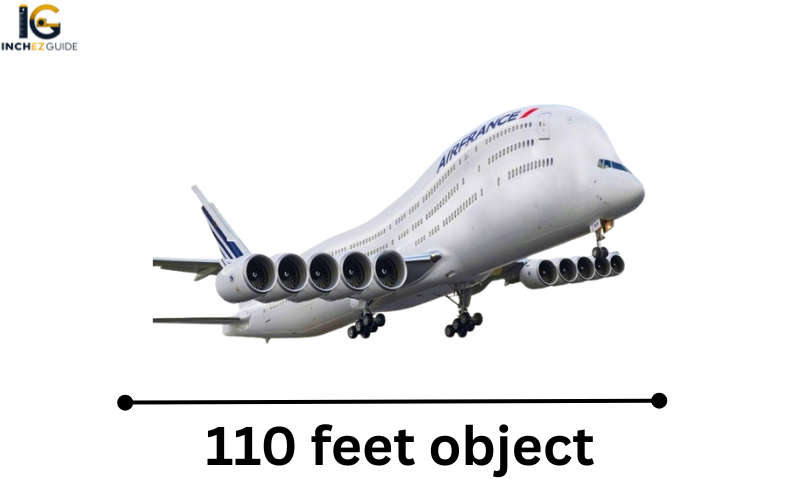
Many commercial passenger airplanes have wingspans that measure close to 110 feet.
When standing near an aircraft at an airport, people are often surprised by how enormous airplane wings actually are. From one wingtip to the other, the distance can stretch approximately 110 feet depending on the aircraft model.
This comparison is particularly useful because airports provide a powerful visual sense of scale. Aircraft are designed to transport hundreds of passengers, and their wings must be large enough to generate the lift required for flight.
If you’ve ever looked out of an airport terminal window at parked airplanes, imagine measuring the entire wingspan from one side to the other. That distance is often very close to 110 feet.
6. Two Semi-Trailers Parked End To End
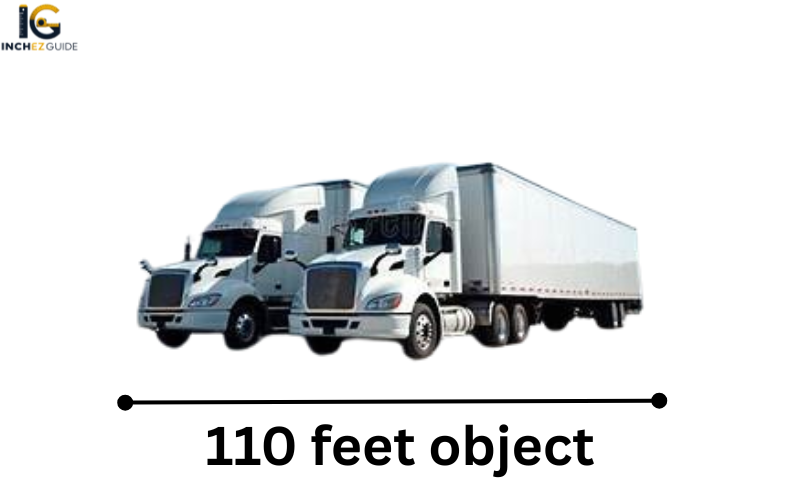
Semi-trucks are another familiar object that can help you picture 110 feet.
A standard semi-trailer is typically about 53 feet long. Two trailers parked bumper to bumper create a total length of approximately 106 feet.
That is remarkably close to 110 feet.
Because trucks are common on highways and roads, most people can easily imagine this comparison. Seeing two large trailers connected in a straight line creates a strong visual reference for understanding this measurement.
The next time you pass a truck stop or distribution center, imagine two trailers lined up end to end. The resulting distance closely matches 110 feet.
7. Nine Standard Parking Spaces
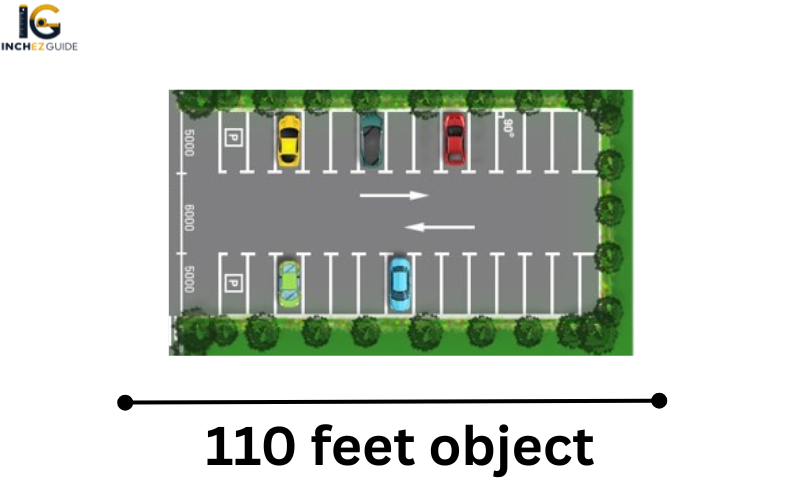
Parking spaces provide a useful comparison because they are something people encounter almost every day.
A typical parking space measures about 12 feet long. If nine parking spaces are arranged in a straight line, they create a distance of approximately 108 feet.
This is nearly identical to 110 feet.
Parking lots are often easier to visualize than other large objects because they contain repeated measurements. By counting about nine parking spaces in a row, you can estimate a distance very close to 110 feet.
This comparison is especially practical because it works almost anywhere, whether you’re at a shopping center, office building, school, or sports venue.
8. A Mature Blue Whale
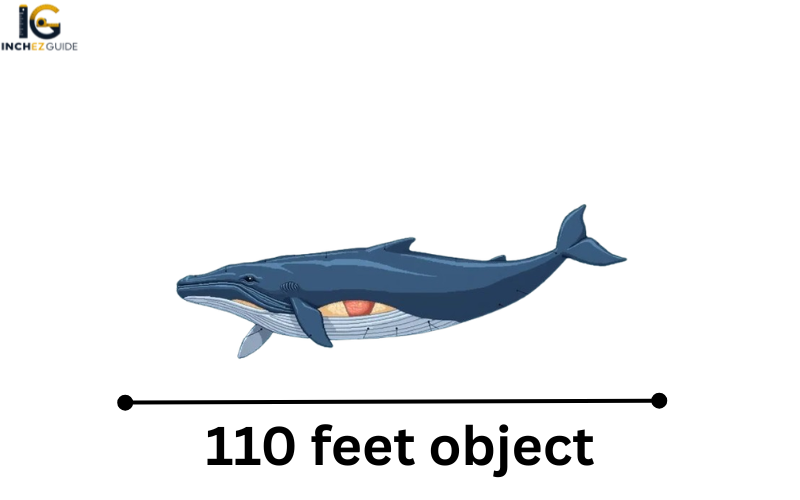
The blue whale is the largest animal ever known to exist, and some mature individuals can reach lengths of approximately 100 to 110 feet.
Imagining a creature that long helps demonstrate the enormous scale of this measurement.
Most people know blue whales are massive, but few realize they can grow as long as 110 feet. If one were placed on a football field, it would cover a substantial portion of the playing area.
Comparing 110 feet to a blue whale not only provides an accurate visual reference but also highlights the incredible size of these marine giants.
For many readers, this becomes one of the most memorable comparisons in the entire article.
Why Understanding 110 Feet Matters
Understanding the size of 110 feet is useful in many real-world situations.
Construction Projects
Builders frequently work with dimensions measured in feet. Whether planning foundations, structures, or roadways, understanding large measurements improves accuracy and communication.
Real Estate
Property listings often include lot dimensions in feet. Knowing how long 110 feet is can help buyers better understand the size of a property.
Landscaping
Large gardens, parks, and outdoor projects often use measurements close to this range. Visualizing 110 feet helps when planning layouts and boundaries.
Sports And Recreation
Athletic facilities use various measurements that can be compared to 110 feet, making this knowledge useful for coaches, athletes, and planners.
How To Visualize 110 Feet Without Measuring Tools
If you don’t have a measuring tape available, there are still several ways to estimate 110 feet.
Count Parking Spaces
Nine parking spaces in a straight row provide a surprisingly accurate estimate.
Use Vehicles
Three school buses or two semi-trailers can help you visualize the distance quickly.
Compare To Buildings
Looking at an 11-story building provides a useful height comparison.
Think About A Football Field
Imagine roughly one-third of a football field and you’ll have a solid understanding of the measurement.
Common Things Measured Around 110 Feet
Many real-world structures and objects fall near this length.
Examples include:
- Small office buildings
- Large yachts
- Commercial warehouses
- Construction cranes
- Industrial facilities
- Airport structures
- Large bridges
- Communication towers
These examples show how frequently measurements around 110 feet appear in everyday life.
FAQs
How big is 110 feet in meters?
110 feet equals approximately 33.53 meters.
How many inches are in 110 feet?
There are 1,320 inches in 110 feet.
Is 110 feet longer than a basketball court?
Yes. A standard basketball court is 94 feet long, making 110 feet noticeably longer.
How many stories tall is 110 feet?
An average building with 11 stories is approximately 110 feet tall.
How many yards is 110 feet?
110 feet equals approximately 36.67 yards.
See Also: How Big Is 100 Feet
Conclusion
Understanding how big 110 feet is becomes much easier when you compare it to familiar objects and structures. Whether you imagine three school buses parked end to end, an 11-story building, a large airplane wingspan, nine parking spaces, or a massive blue whale, these comparisons transform an abstract number into something you can easily visualize.
110 feet=33.53 meters110 { feet} = 33.5 { meters}110 feet=33.53 meters
The next time you encounter a measurement of 110 feet, you’ll have several real-world references ready to help you picture its true size. Instead of simply seeing a number, you’ll understand the impressive scale that 110 feet represents.