
Have you ever come across a product specification that says 70 mm and wondered how long that actually is? Whether you’re shopping online, measuring an object for a DIY project, comparing hardware sizes, or simply curious about metric measurements, understanding the real size of 70 mm can be extremely useful.
Numbers alone don’t always help us visualize measurements. Most people find it easier to understand a length when it is compared to everyday objects they see regularly. That’s why real-life examples are one of the best ways to picture a measurement like 70 mm.
The simple answer is:
This means 70 millimeters is equal to 7 centimeters or approximately 2.76 inches.
In this guide, you’ll learn exactly how long is 70 mm through practical comparisons, common objects, conversion charts, and visual references that make this measurement easy to understand.
What Does 70 MM Mean?
Millimeter (mm) is a metric unit of length commonly used throughout the world. It is one of the most accurate and widely used units for measuring small objects and dimensions.
A millimeter is one-thousandth of a meter, making it ideal for precision measurements.
Here are some common conversions for 70 mm:
- 70 millimeters
- 7 centimeters
- 2.76 inches
- 0.23 feet
Manufacturers, engineers, builders, designers, and retailers frequently use millimeters because they provide more precise measurements than inches.
You will often find millimeters used for:
- Electronics
- Mechanical parts
- Furniture dimensions
- Hardware
- Construction materials
- Medical devices
- Automotive components
Understanding how long 70 mm is can help you make better purchasing decisions and avoid mistakes when comparing product sizes.
How Long Is 70 MM Visually?
Many people struggle to imagine the length of 70 mm because they rarely use millimeters in everyday conversation.
A good way to visualize it is to think about an object that is slightly shorter than 3 inches.
Seventy millimeters is not very large, but it is big enough to be noticeable in your hand. It is longer than a golf ball’s diameter but shorter than the width of many smartphones.
If you placed an object measuring 70 mm on a desk, it would take up roughly the same space as several small household items placed side by side.
The easiest way to understand this measurement is by comparing it to familiar objects.
8 Common Objects That Are About 70 MM Long
1. A Large Chicken Egg
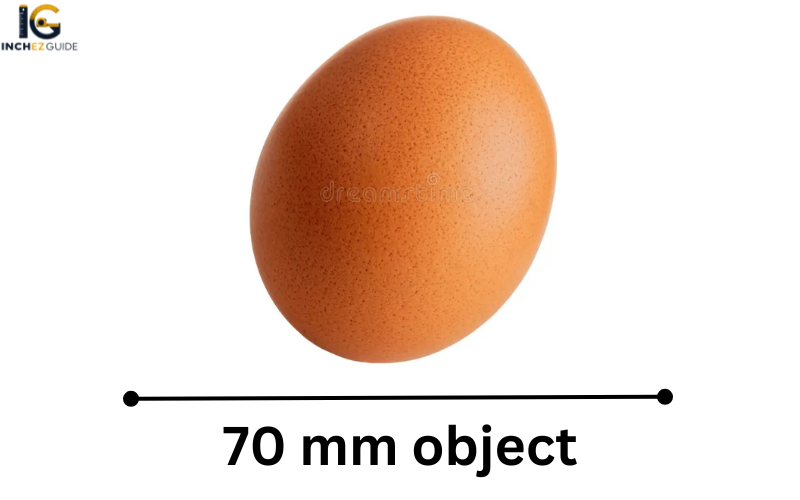
One of the easiest ways to visualize 70 mm is by looking at a large chicken egg.
Many large eggs measure close to 70 mm from top to bottom. Although egg sizes vary slightly depending on the breed and region, a large egg provides an excellent visual reference.
Most people have eggs in their kitchen, making this one of the simplest ways to picture 70 mm without a ruler.
If you hold a large egg vertically, you are looking at something very close to 70 mm in length.
2. A Computer Mouse Width
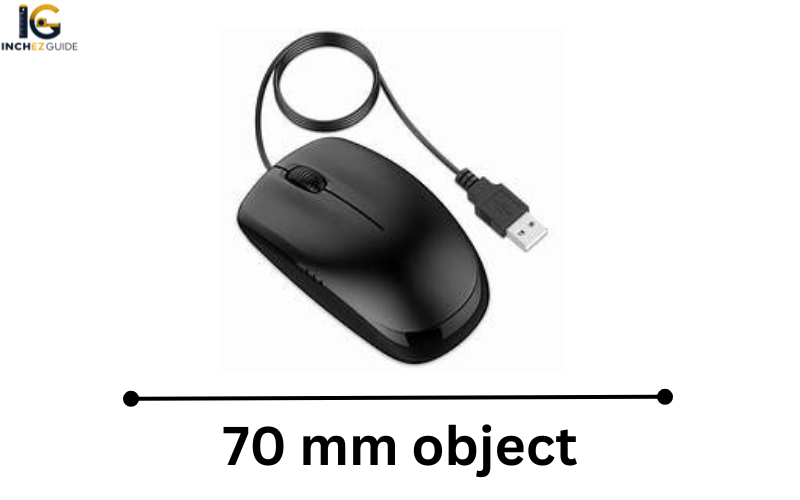
Many standard computer mice measure between 65 and 75 mm across their widest point.
If you work on a laptop or desktop computer regularly, you probably see an object around 70 mm every day without realizing it.
The width of a computer mouse offers a practical comparison because it closely matches the dimensions of many products listed as 70 mm.
This makes it one of the most useful real-world examples.
3. A Credit Card’s Short Side
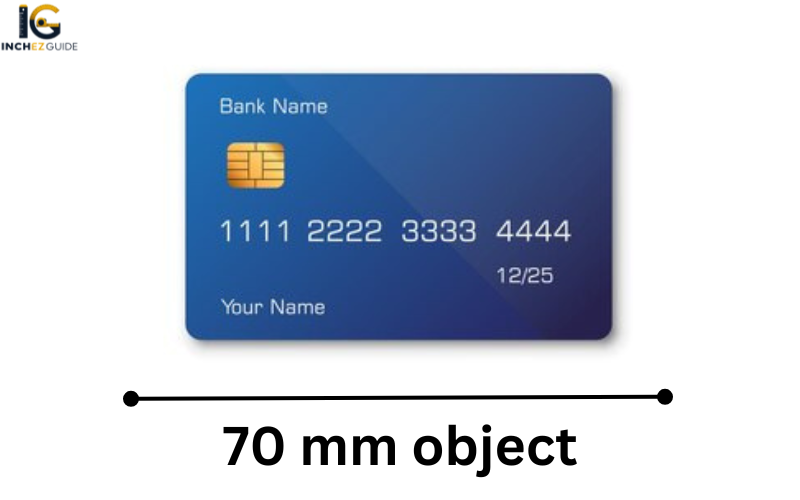
A standard credit card measures approximately 54 mm in height and 85.6 mm in width.
While the long side is larger than 70 mm, the difference isn’t huge. If you imagine a credit card and remove a small portion from one end, you get a good estimate of 70 mm.
Because almost everyone carries a credit card, debit card, or identification card, this comparison is easy to remember.
4. A Hockey Puck Diameter
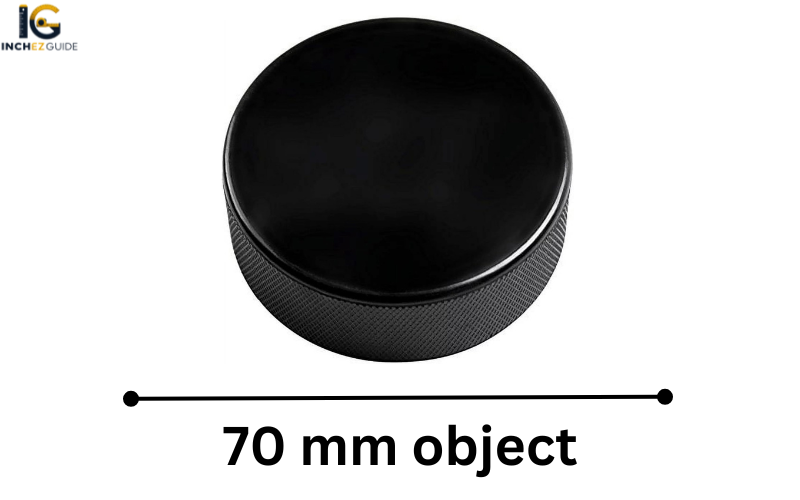
A standard hockey puck measures approximately 76 mm in diameter.
That means 70 mm is only slightly smaller than the width of a hockey puck.
Sports enthusiasts often find this comparison useful because hockey pucks have standardized dimensions worldwide.
When visualizing 70 mm, think of a hockey puck that is just a little smaller.
5. A Travel Soap Bar
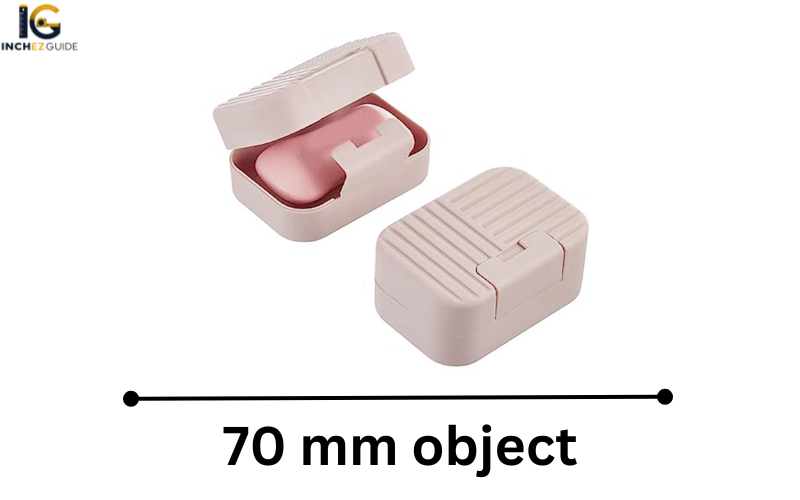
Many travel-sized soap bars measure between 65 mm and 75 mm in length.
These compact soaps are designed for convenience and often fall very close to the 70 mm range.
If you’ve ever packed toiletries for a trip, you’ve likely handled an object that closely matches this measurement.
The rectangular shape also makes it easier to compare against other objects.
6. A Lens Cap For A Camera
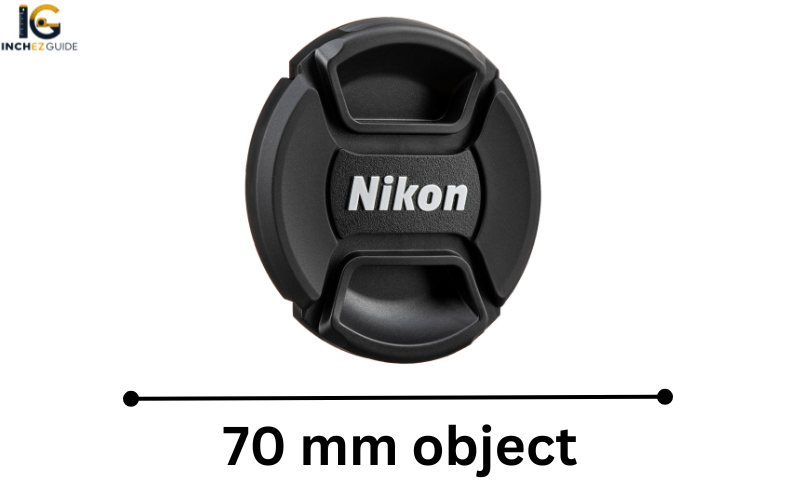
Many DSLR and mirrorless camera lens caps are manufactured around the 67 mm to 72 mm range.
Photographers frequently encounter lens accessories that measure close to 70 mm.
Because camera equipment follows standardized sizing systems, lens caps provide a surprisingly accurate visual reference.
If you own photography gear, you may already have a 70 mm object sitting nearby.
7. A Small Measuring Tape Case
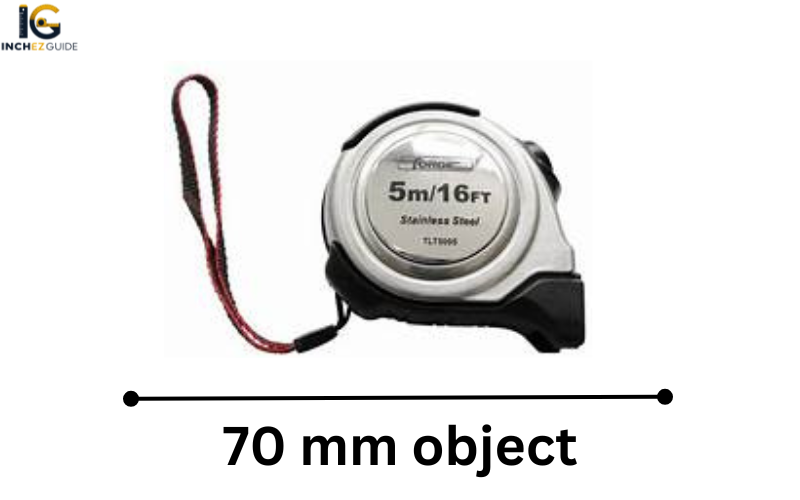
Compact measuring tape cases often measure around 70 mm across.
These tools are commonly found in workshops, garages, and construction sites.
Their size makes them comfortable to hold while remaining large enough to fit measuring mechanisms inside.
Many DIY enthusiasts use these tools regularly, making them another practical example of 70 mm.
8. A Tennis Ball Can Diameter
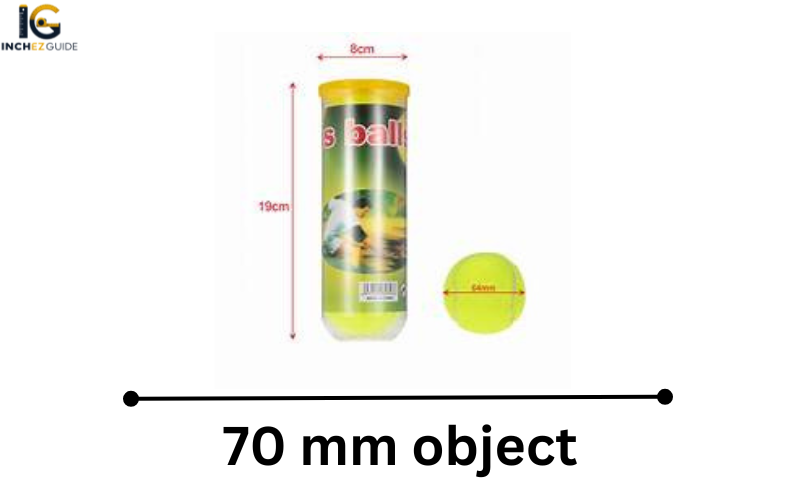
The diameter of many tennis ball containers falls very close to 70 mm.
Sports packaging is often manufactured using standard dimensions, and tennis ball cans provide a useful comparison for visualizing this length.
Because these containers are cylindrical, they offer a clear representation of how wide 70 mm actually is.
Why Understanding 70 MM Is Important
Understanding measurements isn’t just useful for mathematics. It has many practical applications in everyday life.
When shopping online, dimensions often determine whether a product fits your needs.
For example:
- Phone accessories
- Furniture parts
- Kitchen gadgets
- Hardware
- Electronics
Many buyers return products because they misunderstand measurements.
Knowing what 70 mm looks like can prevent those mistakes.
In professional environments, understanding measurements improves communication between buyers, sellers, engineers, and manufacturers.
It also helps you compare products more confidently.
How To Measure 70 MM Without A Ruler
Sometimes you need to estimate a measurement when a ruler isn’t available.
Fortunately, several common objects can help.
Use A Large Egg
A large chicken egg is often very close to 70 mm in length.
Compare With A Computer Mouse
Many computer mice are approximately 70 mm wide.
Use A Credit Card
A standard card provides a useful visual reference because its dimensions are well-known.
Use A Smartphone
Many smartphones have measurement applications that can estimate lengths directly from the screen or camera.
Compare With A Lens Cap
Photography accessories often fall near the 70 mm range.
These simple comparisons can help you estimate 70 mm surprisingly accurately.
70 MM Conversion Chart
Here are some useful metric conversions.
| Millimeters | Centimeters |
| 10 mm | 1 cm |
| 20 mm | 2 cm |
| 30 mm | 3 cm |
| 50 mm | 5 cm |
| 70 mm | 7 cm |
| 100 mm | 10 cm |
Since there are 10 millimeters in a centimeter, converting 70 mm to centimeters is straightforward.
70 MM To Inches Conversion
Many countries still use inches as their primary measurement unit.
Here is a quick reference chart.
| Millimeters | Inches |
| 25 mm | 0.98 in |
| 50 mm | 1.97 in |
| 70 mm | 2.76 in |
| 75 mm | 2.95 in |
| 100 mm | 3.94 in |
This shows that 70 mm is slightly smaller than 3 inches.
Understanding both systems can be helpful when comparing international product specifications.
Common Things Measured Around 70 MM
You may be surprised how many products have dimensions near 70 mm.
Some common examples include:
- Computer mice
- Travel soap bars
- Camera lens caps
- Small speakers
- Measuring tape cases
- Hockey pucks
- Sports containers
- Electronic accessories
Because 70 mm falls into a practical medium-small size category, manufacturers frequently use this measurement.
This is especially common in consumer products and electronics.
Easy Ways To Remember 70 MM
One of the best ways to remember a measurement is by associating it with familiar objects.
You can remember 70 mm by thinking about:
- A large chicken egg
- A computer mouse
- A hockey puck
- A camera lens cap
Another useful trick is remembering that:
70 mm = 7 cm
Most people find centimeters easier to visualize than millimeters.
Once you remember the 7 cm conversion, estimating 70 mm becomes much easier.
Common Mistakes When Estimating 70 MM
Many people accidentally confuse millimeters with centimeters.
For example:
70 mm is not 70 cm.
It is only 7 cm.
Another common mistake is assuming 70 mm equals 7 inches.
In reality, it equals only 2.76 inches.
Misunderstanding these conversions can lead to purchasing the wrong products or making measurement errors during projects.
Using familiar reference objects helps avoid these mistakes.
FAQs
How long is 70 mm in centimeters?
70 mm equals exactly 7 centimeters.
How long is 70 mm in inches?
70 mm equals approximately 2.76 inches.
Is 70 mm close to 3 inches?
Yes. It is slightly smaller than 3 inches.
What object is about 70 mm long?
A large chicken egg is one of the closest everyday examples.
Is 70 mm considered large?
No. It is generally considered a small-to-medium measurement.
Why do manufacturers use millimeters?
Millimeters provide greater accuracy and precision than larger units such as inches or centimeters.
Can I estimate 70 mm without a ruler?
Yes. You can compare it with a computer mouse, large egg, lens cap, or similar-sized object.
See Also: How Big Is 60 mm
Conclusion
Understanding how long is 70 mm becomes much easier when you compare it to familiar objects. Rather than thinking about numbers alone, visual references such as a large chicken egg, computer mouse, hockey puck, travel soap bar, or camera lens cap help create a clear mental picture of this measurement.
Whether you’re shopping online, comparing product dimensions, working on a DIY project, or learning about measurements, knowing the actual size of 70 mm can save time and improve accuracy.
By using the examples, comparisons, and conversion charts in this guide, you can now confidently estimate and recognize 70 mm in everyday life.