
Have you ever wondered how big is 30 feet? Whether you’re planning a landscaping project, measuring a room, buying a boat, estimating property dimensions, or simply curious about a measurement you’ve seen online, visualizing 30 feet can be more challenging than it sounds.
Most people don’t naturally think in feet. We understand size much better when measurements are compared to familiar objects we see every day. That’s why real-life examples are one of the easiest ways to understand what 30 feet actually looks like.
A length of 30 feet equals 360 inches, 10 yards, or approximately 9.14 meters. While these numbers are useful, they don’t always create a clear picture in your mind. Comparing 30 feet to sofas, parking spaces, boats, trees, and other recognizable objects makes the measurement much easier to understand.
In this guide, you’ll learn exactly how big is 30 feet, explore eight real-world examples, discover practical measurement comparisons, and find simple ways to estimate 30 feet without using a tape measure.
How Big Is 30 Feet?
Thirty feet is a moderate-to-large measurement that appears frequently in construction, real estate, architecture, landscaping, sports, and everyday life.
Here are some quick conversions:
- 30 feet = 360 inches
- 30 feet = 10 yards
- 30 feet = 9.14 meters
- 30 feet = 0.0057 miles
- 30 feet = 914.4 centimeters
To put that into perspective, 30 feet is longer than most living rooms, wider than many residential garages, and roughly the length of some recreational boats.
If someone asked you to walk 30 feet, you would likely cover the distance in about 12 average adult steps.
However, numbers alone don’t always help us visualize length. That’s why the following real-world examples are so useful.
8 Real-Life Objects That Are About 30 Feet Long
1. Three Standard Sofas Placed End-to-End
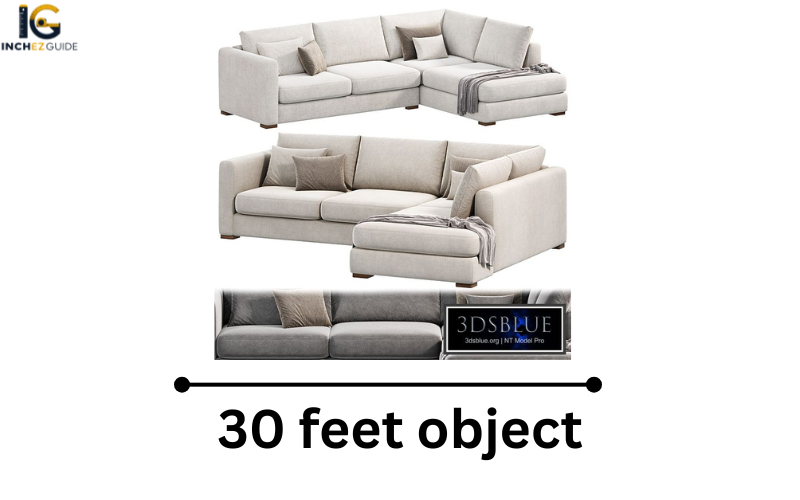
One of the easiest ways to imagine 30 feet is by thinking about sofas.
A standard sofa is usually around 9 to 10 feet long. If you placed three average sofas in a straight line, they would measure approximately 30 feet from one end to the other.
Most people see sofas every day, making this a practical comparison. Imagine entering a large furniture showroom and seeing three couches lined up together. The total length would be very close to 30 feet.
This example is especially useful when estimating indoor dimensions.
2. Two Standard Parking Spaces
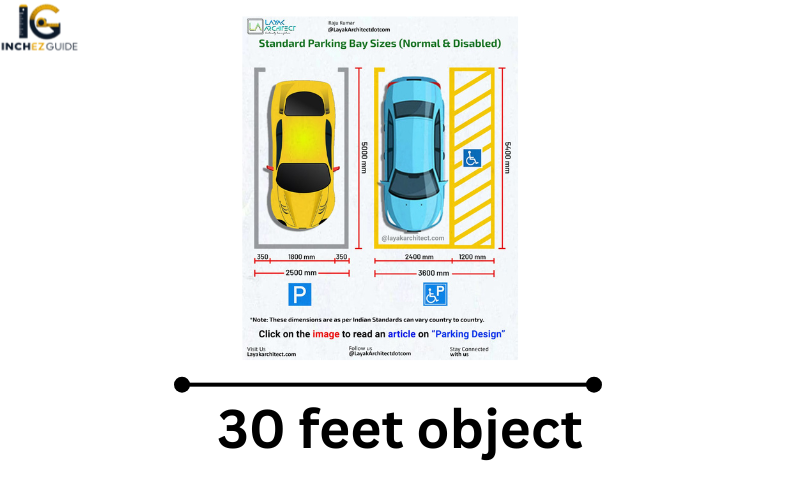
A standard parking space in many areas measures approximately 15 feet long.
When two parking spaces are placed end-to-end, the combined distance becomes approximately 30 feet.
This is one of the easiest outdoor comparisons because parking lots are everywhere. The next time you visit a shopping center, look at two adjacent parking spaces and imagine them connected lengthwise.
That distance is very close to 30 feet.
3. A Medium-Sized Recreational Boat
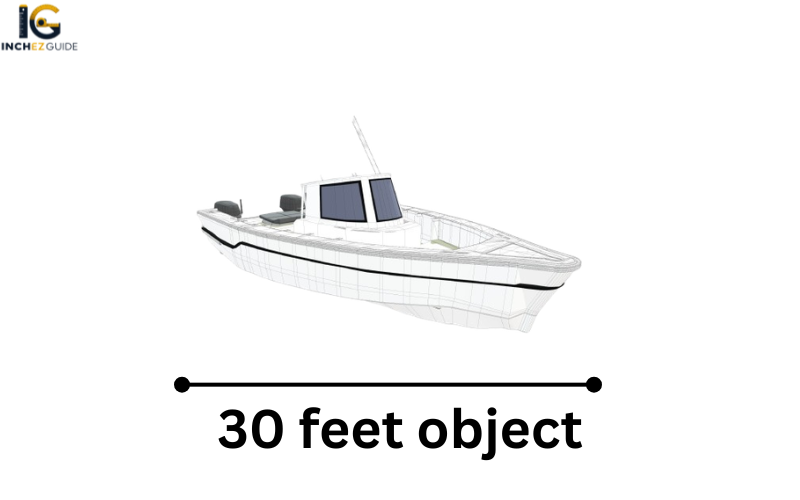
Many recreational boats fall within the 28-to-32-foot range.
If you’ve ever walked around a marina, you’ve probably seen boats close to 30 feet long without realizing it.
A 30-foot boat is large enough to accommodate multiple passengers, sleeping quarters, and storage areas while still being manageable for recreational use.
Visualizing one of these boats can provide an excellent understanding of how substantial 30 feet actually is.
4. A Mature Palm Tree
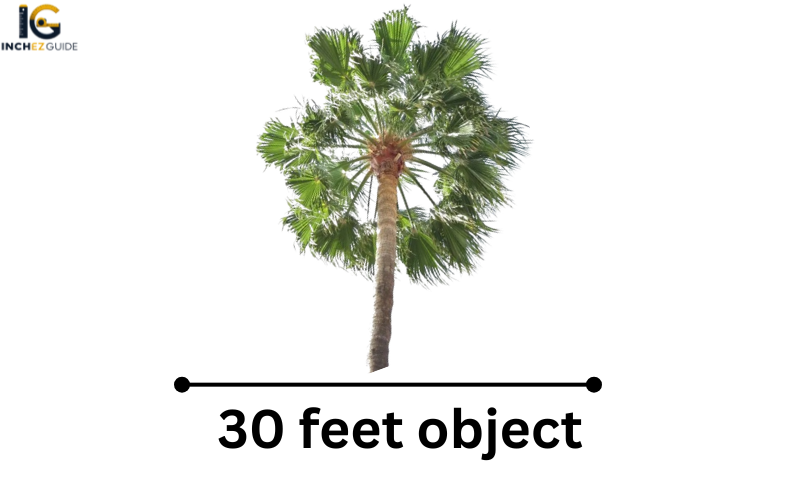
Many mature palm tree varieties reach heights of around 30 feet.
Although height and length are different dimensions, using vertical references can still help you understand the size of 30 feet.
Imagine standing beside a fully grown palm tree extending 30 feet into the air. Looking upward at that height provides a strong visual reference for understanding the measurement.
This comparison is particularly useful because palm trees are common in many residential and commercial landscapes.
5. Five Adult Bicycles Lined Up
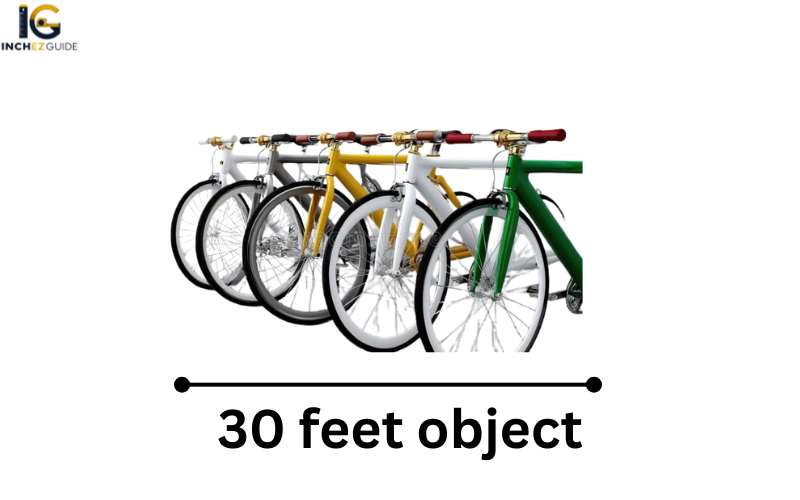
A typical adult bicycle measures approximately 6 feet in length.
When five bicycles are placed wheel-to-wheel in a straight line, the total length becomes roughly 30 feet.
This is an easy comparison because bicycles are common household items.
If you can picture five bicycles lined up in a row, you already have a surprisingly accurate mental image of what 30 feet looks like.
6. Two Average Cars Parked Nose-to-Tail
Most passenger vehicles range from 14 to 16 feet in length.
Two average cars parked bumper-to-bumper create a combined length very close to 30 feet.
Many people are familiar with vehicle dimensions, making this one of the most practical ways to estimate 30 feet.
Imagine two family sedans parked directly behind one another. The overall length would closely match the measurement you’re trying to visualize.
7. Ten Shopping Carts Connected Together
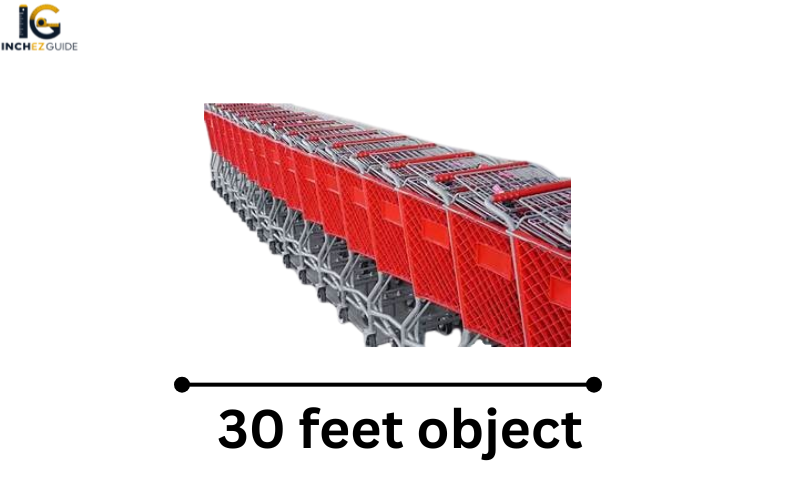
A standard shopping cart is approximately 3 feet long.
Ten shopping carts connected in a line would stretch to around 30 feet.
Anyone who has visited a supermarket has likely seen long rows of nested carts near the entrance.
This comparison offers another everyday way to understand the measurement without requiring specialized knowledge.
8. Three Adult Giraffes Standing End-to-End
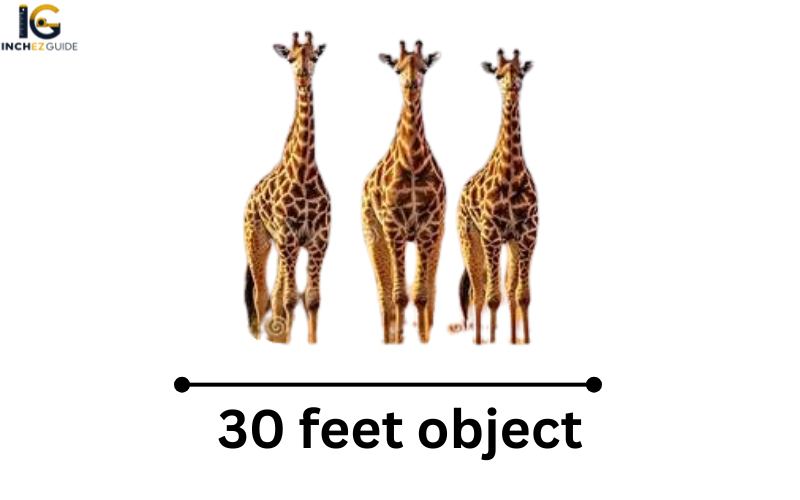
An adult giraffe can have a body length close to 10 feet.
Three giraffes lined up nose-to-tail would create a total length of approximately 30 feet.
While not something you see every day, this example creates a memorable mental image that many people find easy to remember.
How Big Is 30 Feet Compared to a House?
Most residential homes contain rooms ranging from 10 to 20 feet in length.
A typical living room might measure around 15 feet long. Therefore, 30 feet would be equivalent to two average living rooms placed end-to-end.
For many small homes, 30 feet may represent a significant portion of the building’s width or length.
In practical terms, 30 feet is enough space to fit:
- Multiple vehicles
- Large patio furniture sets
- Small swimming pools
- Recreational vehicles
- Outdoor entertainment areas
Because of this, 30 feet is a very common measurement in residential planning and construction projects.
How Long Is 30 Feet in Steps?
One of the easiest ways to estimate 30 feet without a measuring tape is by walking.
The average adult stride measures approximately 2.5 feet.
Using this estimate:
30 feet ÷ 2.5 feet per step = 12 steps
Therefore, most adults can cover 30 feet in approximately 12 normal walking steps.
Keep in mind that stride length varies depending on a person’s height and walking style, but this method usually provides a reasonably accurate estimate.
How Big Is 30 Feet in Meters?
Many countries use the metric system rather than feet.
The conversion is straightforward:
30 feet = 9.14 meters
You can also think of this as slightly more than 9 meters.
For readers accustomed to metric measurements, this conversion may provide a clearer understanding of the distance.
What Can Fit Within 30 Feet?
A 30-foot space is surprisingly versatile.
Here are several things that can comfortably fit within a 30-foot area:
- A large camper trailer
- A recreational boat
- A small backyard swimming pool
- Outdoor dining furniture
- Several motorcycles
- Garden pathways
- Children’s playground equipment
- Compact storage structures
This is one reason why 30 feet is a popular measurement in both residential and commercial projects.
How to Estimate 30 Feet Without a Tape Measure
Many situations require a quick estimate when measuring tools aren’t available.
Fortunately, there are several easy methods.
Count Your Walking Steps
Most adults take around 12 steps to cover 30 feet.
This is often the quickest estimation technique.
Use Parking Spaces
Visualize two standard parking spaces connected end-to-end.
The combined length is very close to 30 feet.
Compare With Vehicles
Two average cars parked bumper-to-bumper create a length of approximately 30 feet.
Use Furniture References
Three standard sofas lined up together provide another reliable estimate.
Look at Trees
Many mature palm trees grow to approximately 30 feet tall.
These everyday references can help you estimate distances surprisingly accurately.
Common Measurements Compared to 30 Feet
Understanding nearby measurements can help create additional perspective.
| Measurement | Comparison |
| 5 feet | One-sixth of 30 feet |
| 10 feet | One-third of 30 feet |
| 15 feet | Half of 30 feet |
| 20 feet | Two-thirds of 30 feet |
| 25 feet | Slightly shorter than 30 feet |
| 30 feet | Reference length |
| 40 feet | One-third longer than 30 feet |
| 50 feet | Nearly twice 30 feet |
| 100 feet | More than three times 30 feet |
Why Understanding 30 Feet Is Important
Knowing how big is 30 feet can be useful in a variety of situations.
Construction Projects
Builders frequently work with measurements around 30 feet when planning foundations, walls, and outdoor structures.
Landscaping
Garden designers often use 30-foot dimensions when creating pathways, patios, and planting layouts.
Real Estate
Property descriptions regularly include dimensions measured in feet.
Sports and Recreation
Many recreational facilities use measurements that can be compared to 30 feet.
Purchasing Large Items
When buying boats, trailers, RVs, or storage sheds, understanding 30 feet helps determine whether an item will fit in your available space.
Interesting Facts About 30 Feet
Here are some fascinating facts about this measurement:
- 30 feet equals 360 inches.
- 30 feet equals exactly 10 yards.
- It takes approximately 12 average walking steps to cover.
- Many recreational boats measure around 30 feet.
- Some mature palm trees reach roughly 30 feet tall.
- Two standard parking spaces equal approximately 30 feet.
- A 30-foot shipping container is longer than many household rooms.
These comparisons make the measurement easier to remember and recognize in everyday life.
Visualizing 30 Feet in Everyday Situations
Sometimes the easiest way to understand size is through daily experiences.
Imagine:
- Walking across two parking spaces.
- Standing next to a medium-sized yacht.
- Looking up at a mature palm tree.
- Seeing three sofas lined up in a furniture store.
- Viewing two family cars parked nose-to-tail.
Each of these situations provides a realistic sense of what 30 feet looks like without requiring any calculations.
The more often you connect measurements to familiar objects, the easier it becomes to estimate distances accurately.
FAQs
How many inches are in 30 feet?
There are 360 inches in 30 feet.
How many yards is 30 feet?
Thirty feet equals exactly 10 yards.
How many meters is 30 feet?
Thirty feet equals approximately 9.14 meters.
How many steps is 30 feet?
Most adults walk 30 feet in about 12 average steps.
Is 30 feet longer than a school bus?
Some smaller buses are close to 30 feet long, but many full-size school buses are longer.
What is the easiest way to visualize 30 feet?
Two parking spaces placed end-to-end or two average cars parked bumper-to-bumper are among the simplest comparisons.
Is 30 feet a large distance?
Yes. It is longer than most rooms in a typical home and large enough for many outdoor projects and structures.
What objects are about 30 feet long?
Examples include medium-sized recreational boats, two parking spaces, three sofas lined up together, and some mature palm trees.
See Also: How Big Is 20 Feet
Conclusion
If you’ve been wondering how big is 30 feet, the easiest answer is that it’s roughly the length of two parking spaces, three standard sofas, two average cars, or a medium-sized recreational boat.
While 30 feet equals 360 inches, 10 yards, and 9.14 meters, real-world comparisons make the measurement much easier to understand. Whether you’re planning a construction project, measuring outdoor space, buying large equipment, or simply satisfying your curiosity, these examples provide a practical way to visualize the distance.
By using familiar references such as vehicles, furniture, trees, and parking spaces, you’ll be able to estimate 30 feet quickly and confidently in everyday situations.