
Have you ever looked at a product online and wondered, how big is 10 cm actually? Many people struggle to picture measurements when they only see numbers. A size written in centimeters can feel confusing unless you compare it with something familiar.
Ten centimeters is one of the most common measurements used around the world. You’ll find it in school supplies, home décor, crafts, electronics, kitchen tools, and many everyday objects. Even though it sounds small, 10 cm is larger than most people imagine at first.
The easiest way to understand measurements is by comparing them with real-life objects. Instead of trying to imagine a ruler in your head, you can think about items you use every day. This makes visualizing dimensions much simpler and more accurate.
In this detailed guide, you’ll learn:
- Exactly how big 10 cm is
- What 10 cm looks like in inches
- Real-life examples of objects around 10 cm long
- How to estimate 10 cm without a ruler
- Why understanding this measurement is useful
- Common mistakes people make when imagining 10 cm
By the end of this article, you’ll instantly recognize the size of 10 cm in daily life.
How Long Is 10 CM in Inches?
The first thing many people want to know is how 10 cm compares with inches.
10 centimeters equals approximately 3.94 inches.
That means 10 cm is almost exactly 4 inches long. If you are more familiar with inches than centimeters, this comparison helps a lot. Think about a small object that is about 4 inches long, and you already have a pretty accurate idea of how big 10 cm is.
For many people, 4 inches sounds larger than 10 centimeters because centimeters can make measurements feel smaller than they really are. But once converted, it becomes easier to picture.
What Does 10 CM Actually Look Like?
Ten centimeters is considered a small-to-medium measurement. It is not tiny like a coin, but it is not large like a tablet or notebook either.
A 10 cm object:
- Fits comfortably in your hand
- Is slightly shorter than the width of a large smartphone
- Can fit inside most pockets
- Is long enough to notice easily
- Looks bigger than most people expect
If you place your palm flat on a table, the width of your hand is often close to 10 cm. That gives you an instant real-world visualization.
Many everyday objects around your home are surprisingly close to this size.
Why Understanding 10 CM Is Important
You may not realize it, but measurements affect daily life constantly.
Understanding how big 10 cm is can help with:
- Shopping online
- Ordering furniture or decorations
- Buying electronics
- DIY projects
- School assignments
- Crafting and sewing
- Cooking and baking
- Packaging and shipping
- Understanding product descriptions
One of the biggest reasons people search for measurement guides is because product photos online can be misleading. An item may appear large in photos but arrive much smaller than expected.
Knowing how to visualize 10 cm helps avoid those mistakes.
1. A Standard Popsicle Stick
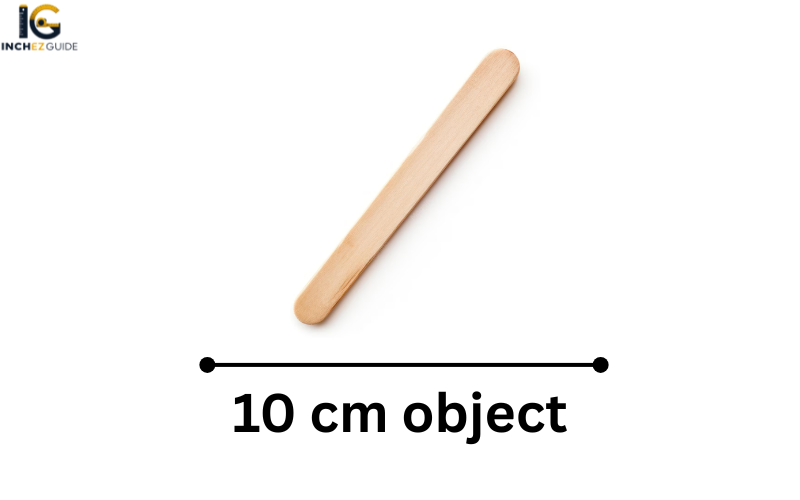
One of the easiest ways to understand how big 10 cm is involves a standard wooden popsicle stick.
Most craft sticks and popsicle sticks measure around 10 to 11 cm long. If you have ever used one in a school project or eaten an ice pop, you already know what this measurement feels like in your hand.
The stick is:
- Slim
- Lightweight
- Easy to hold
- Long enough to fit across your palm
Because popsicle sticks are so common, they make an excellent reference for remembering 10 cm.
2. Width of an Adult Palm
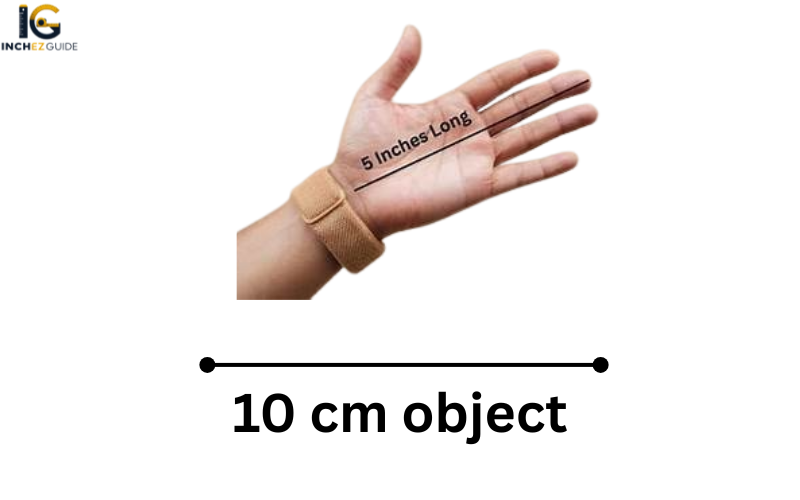
For many adults, the width of the palm is close to 8–10 cm.
This is one of the best measurement tricks because you always have your hand available. If you need to estimate something quickly without a ruler, your palm can act as a natural measuring tool.
Hand sizes vary slightly, but most adult palms are close enough to help estimate 10 cm accurately.
This method is especially useful for:
- Shopping
- Home projects
- Quick size checks
- Craft work
Once you remember your palm width, you can estimate measurements almost anywhere.
3. A Small Banana
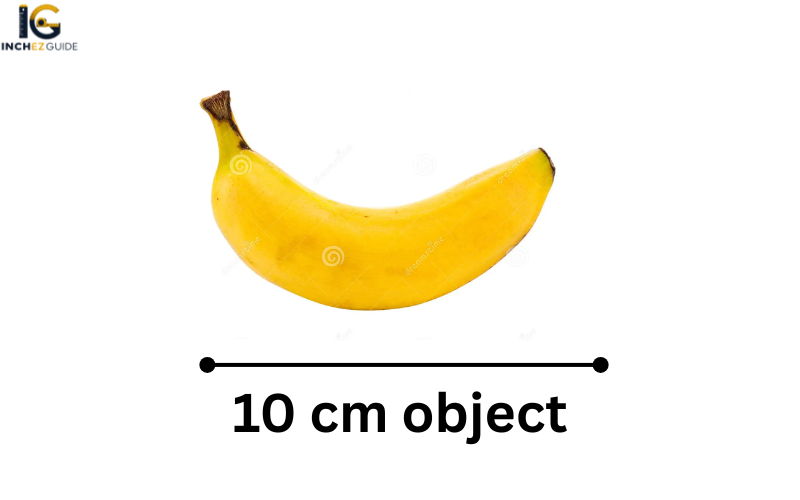
A mini banana or small banana is often around 10 cm long.
While regular bananas are much larger, smaller varieties are surprisingly close to this measurement. Imagine a banana small enough to fit neatly into a lunchbox or snack container.
This comparison works well because bananas are familiar objects that most people can visualize instantly.
4. A Bar of Soap
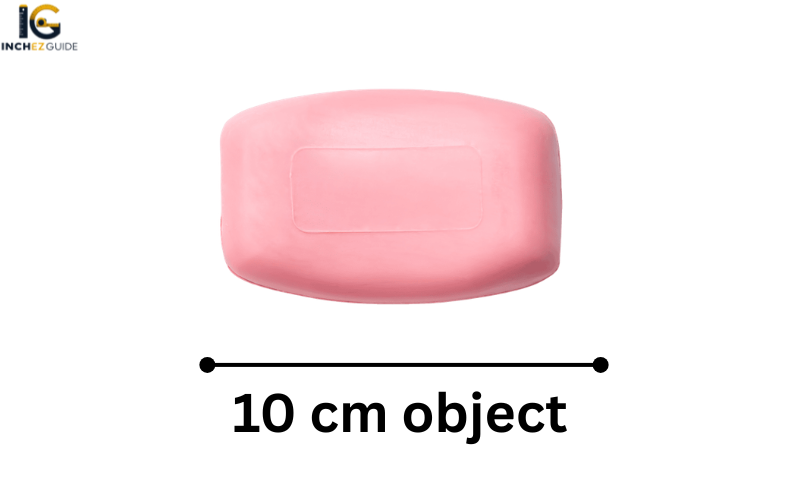
Many standard soap bars are approximately 9–10 cm in length.
When you hold a fresh bar of soap in your hand, that size is very close to what 10 cm feels like physically.
Soap bars are useful measurement references because they are:
- Common
- Easy to imagine
- Similar in size worldwide
This makes them a reliable comparison for understanding 10 cm.
5. Two Large Eggs Together
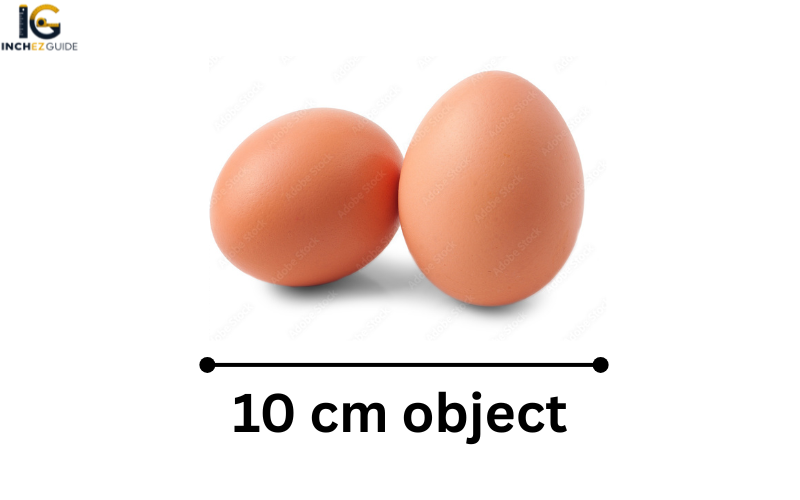
A single large chicken egg is usually around 5 cm long.
If you place two eggs end to end, the total length becomes very close to 10 cm. This simple kitchen comparison helps many people visualize the measurement more accurately.
Eggs are especially useful for:
- Teaching kids measurements
- Cooking-related estimates
- Quick visual comparisons
Because eggs are slightly curved, the estimate is not perfect, but it is very close.
6. The Width of a Smartphone
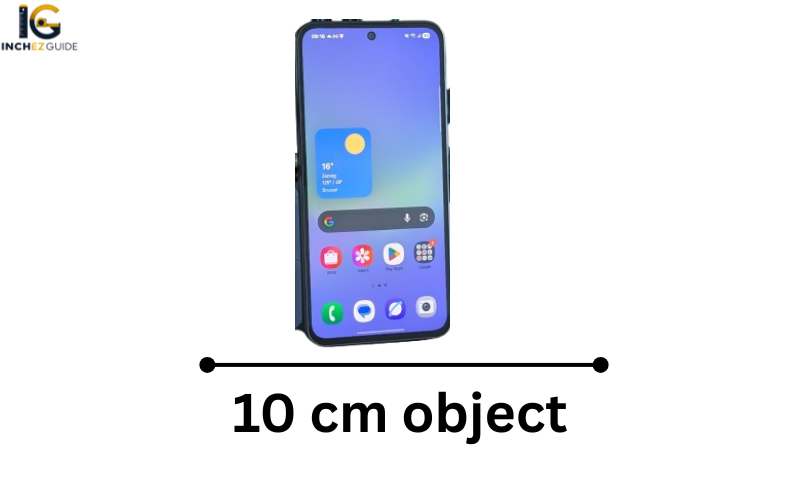
Most smartphones today are around 7–8 cm wide.
If you imagine the width of your phone and add just a little more length mentally, you get very close to 10 cm.
This comparison is extremely practical because people carry phones everywhere. You can quickly estimate measurements without needing tools.
For example:
- Most iPhones are slightly under 10 cm wide
- Large Android phones are also close
- Phone cases can increase the width slightly
Once you compare your phone with a ruler once, you’ll remember the size permanently.
7. A Toothbrush Head and Neck
The upper section of a toothbrush, including the brush head and neck area, is usually close to 10 cm long.
This part of the toothbrush is:
- Narrow
- Lightweight
- Comfortable to hold
- Easy to picture
Toothbrushes are useful references because nearly every household has them.
8. A Compact Flashlight
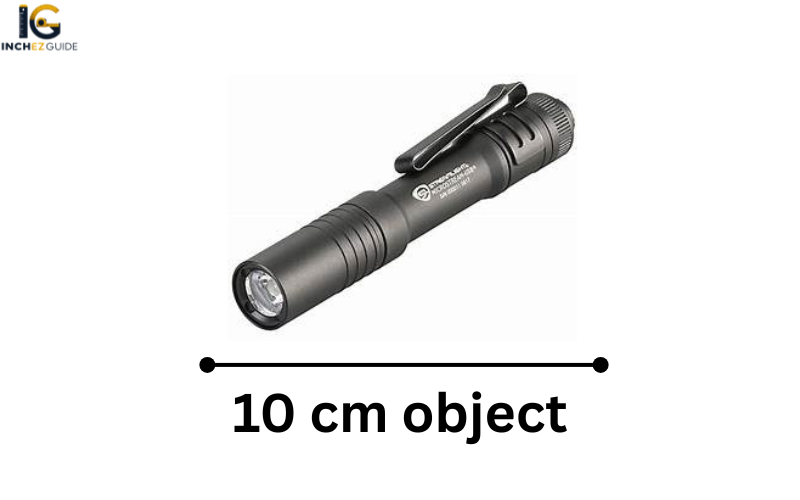
Many pocket flashlights and mini LED torches measure about 10 cm long.
These compact tools are designed to fit easily into:
- Pockets
- Bags
- Car storage compartments
- Emergency kits
Because they are portable and easy to hold, they provide another great example of what 10 cm looks like in real life.
Is 10 CM Considered Small?
Whether 10 cm feels small or large depends on the object.
Small for Furniture
- Tiny for a table
- Very small for a television
- Small for a backpack
Medium for Household Objects
- Average for soap bars
- Normal for kitchen utensils
- Medium for decorative items
Large for Accessories
- Big for jewelry
- Large for keychains
- Huge for coins
This shows why context matters when discussing measurements.
How to Estimate 10 CM Without a Ruler
Sometimes you need to estimate measurements quickly but don’t have measuring tools nearby.
Here are easy methods you can use.
Use Your Palm
Most adult palms are close to 10 cm wide.
Use a Smartphone
Most phones are slightly narrower than 10 cm.
Use Two Credit Cards
Two cards stacked vertically equal roughly 10 cm.
Use a Popsicle Stick
A standard craft stick is nearly the same length.
Use Your Fingers
Four average adult finger widths side by side are often close to 10 cm.
These simple tricks make estimating much easier in daily life.
Common Objects Around 10 CM Long
You may be surprised how many things around your house are close to this measurement.
Examples include:
- Soap bars
- Popsicle sticks
- Pocket combs
- Mini notebooks
- Small candles
- Compact mirrors
- Travel shampoo bottles
- Toy cars
- Sticky note pads
- Kitchen peelers
- Small remote controls
- Decorative figurines
Once you start noticing measurements, you’ll realize 10 cm appears everywhere.
How Big Is 10 CM Compared to Other Measurements?
Understanding comparisons helps make measurements easier to remember.
Compared to 1 CM
10 cm is ten times longer than 1 cm.
Compared to 5 CM
10 cm is double the size of 5 cm.
Compared to 15 CM
10 cm is smaller than half a school ruler.
Compared to 30 CM
10 cm is one-third the size of a standard ruler.
These comparisons help build a stronger sense of scale.
Why Online Shopping Makes 10 CM Important
Online shopping is one of the main reasons people search measurement guides today.
Photos can create illusions:
- Small objects can appear large
- Zoomed images distort scale
- Backgrounds confuse dimensions
A decorative item labeled “10 cm” may seem huge in photos but actually fit inside your palm.
Understanding real-world comparisons helps avoid disappointment.
Before buying anything online, compare the dimensions with:
- Your phone
- Your hand
- A soap bar
- A popsicle stick
This gives a much more accurate mental picture.
How Big Is 10 CM in Crafts and DIY Projects?
Crafting often uses centimeter measurements because they are precise and easy to scale.
Ten centimeters is common for:
- Fabric squares
- Crochet samples
- Wooden craft pieces
- Sticker designs
- Resin molds
- Candle molds
- Decorative patches
Crafters frequently memorize this measurement because it appears in many templates and instructions.
Teaching Kids What 10 CM Looks Like
Children learn measurements faster when they compare numbers with real objects.
Teachers often use:
- Popsicle sticks
- Crayons
- Toy blocks
- Fruit
- Markers
Hands-on learning makes measurements easier to understand and remember.
Instead of memorizing numbers, children connect measurements with familiar items.
Metric vs Imperial Measurements
Some countries mainly use centimeters, while others prefer inches.
This difference often causes confusion when shopping internationally.
Remembering this conversion helps:
10 cm = 3.94 inches
Once you think of 10 cm as “almost 4 inches,” visualizing the size becomes much easier.
Common Mistakes People Make About 10 CM
Many people imagine 10 cm incorrectly.
Thinking It Is Smaller Than Reality
Because centimeters sound small, people often underestimate the size.
Forgetting Unit Differences
Some confuse millimeters with centimeters.
Trusting Photos Too Much
Online images can distort dimensions.
Not Comparing With Familiar Objects
Real-life references make measurements easier to understand.
Avoiding these mistakes helps you estimate sizes more accurately.
Fun Facts About 10 CM
- Many coffee mugs are around 10 cm tall.
- Small indoor plant pots are often 10 cm wide.
- Compact mirrors commonly measure around 10 cm.
- Some action figures are close to 10 cm tall.
- Pocket notebooks are often around this size.
You interact with 10 cm objects almost every day without noticing.
Easy Ways to Remember How Big 10 CM Is
The best way to remember measurements is through repetition and comparison.
Think about:
- A popsicle stick
- Your palm width
- A small soap bar
- A compact flashlight
- A small banana
These objects create a strong mental image that helps you estimate quickly anytime.
FAQs
Is 10 cm equal to 4 inches?
Not exactly, but it is very close.
10 cm equals approximately 3.94 inches.
What object is exactly 10 cm long?
A standard popsicle stick is one of the closest everyday examples.
Is 10 cm considered large?
It depends on the object. It is small for furniture but large for accessories like jewelry.
Can I estimate 10 cm with my hand?
Yes. Many adult palms are close to 10 cm wide.
How many millimeters are in 10 cm?
There are 100 millimeters in 10 centimeters.
Why do online products use centimeters?
Most countries use the metric system, so centimeters are standard for product dimensions.
See Also: How Big Is 9 CM
Conclusion
Understanding how big is 10 cm becomes much easier when you stop thinking only about numbers and start comparing measurements with real-world objects.
A popsicle stick, soap bar, palm width, compact flashlight, or small banana can instantly help you visualize the size. Since 10 cm is almost equal to 4 inches, it is a practical measurement used in everyday life around the world.
Whether you are shopping online, doing crafts, teaching children, or simply trying to estimate sizes without a ruler, knowing what 10 cm looks like can save time and prevent confusion.
The more you connect measurements with familiar objects, the easier estimating sizes becomes naturally in daily life.