
Have you ever seen a measurement of 75 feet and wondered how big it actually is? While numbers can tell you the exact length, they don’t always help you picture the size in your mind. That’s why many people search for visual comparisons when trying to understand large measurements.
Whether you’re measuring property, planning a construction project, comparing the size of a building, or simply curious about distances, knowing what 75 feet looks like can be extremely useful.
The simple answer is:
However, understanding 75 feet becomes much easier when you compare it with familiar objects and structures that you see in everyday life.
In this guide, you’ll discover exactly how big 75 feet is, learn practical comparisons, explore real-life examples, and find out where this measurement commonly appears.
What Does 75 Feet Mean?
A foot is a standard unit of measurement used in the imperial system. One foot contains 12 inches, making 75 feet equal to 900 inches.
This measurement is often used when describing:
- Building heights
- Property dimensions
- Trees
- Large vehicles
- Sports facilities
- Construction projects
Here are some quick conversions:
- 75 feet = 900 inches
- 75 feet = 25 yards
- 75 feet = 22.86 meters
Although 75 feet is not as large as a skyscraper or football field, it is still much bigger than most people initially imagine.
How Big Is 75 Feet Visually?
The human brain understands size better through comparisons than through numbers alone.
If someone tells you something is 75 feet long, you might struggle to picture it immediately. But if they tell you it is about the length of five parked cars or as tall as a seven-story building, it suddenly becomes much easier to understand.
The following examples will help you visualize the true size of 75 feet.
8 Common Things That Are About 75 Feet Long
1. Five Average Cars Parked In A Row
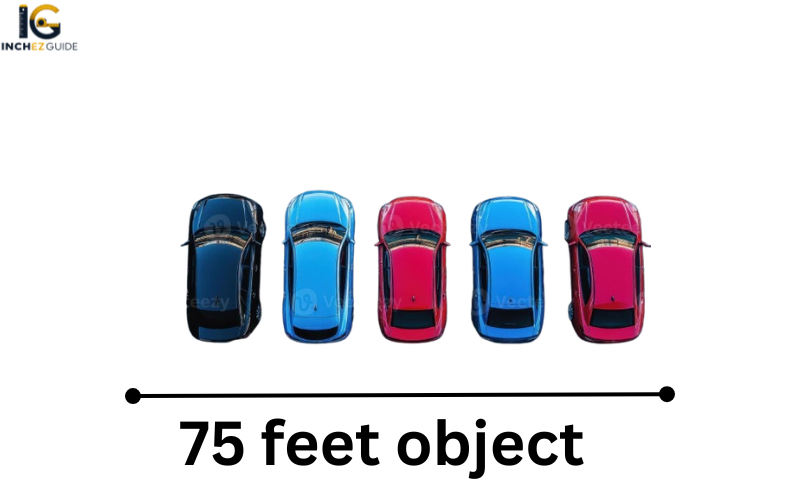
One of the easiest ways to visualize 75 feet is by imagining five average cars parked bumper to bumper.
Most passenger cars measure approximately 15 feet long. When five of them are lined up in a straight row, their combined length is very close to 75 feet.
This comparison works well because almost everyone sees cars daily. If you’ve ever walked through a parking lot, you can quickly imagine how much space five parked vehicles occupy.
Looking at five sedans parked end-to-end provides one of the most accurate everyday visualizations of 75 feet.
2. A Seven-Story Building
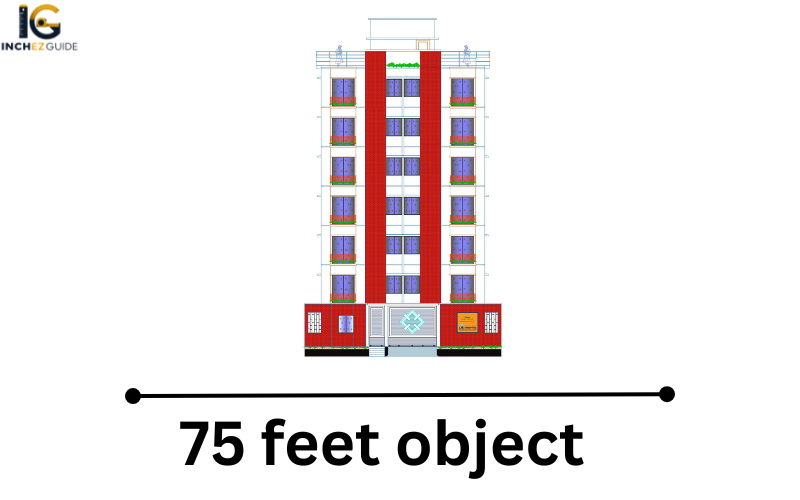
A typical residential or office building floor measures around 10 to 11 feet in height.
When you stack seven floors together, the building reaches approximately 70 to 77 feet tall.
This makes a seven-story building an excellent comparison for understanding 75 feet.
Standing at the base of such a building and looking upward gives a strong sense of how substantial this measurement really is.
Although architectural designs vary, many seven-story structures fall very close to the 75-foot mark.
3. A Mature Pine Tree
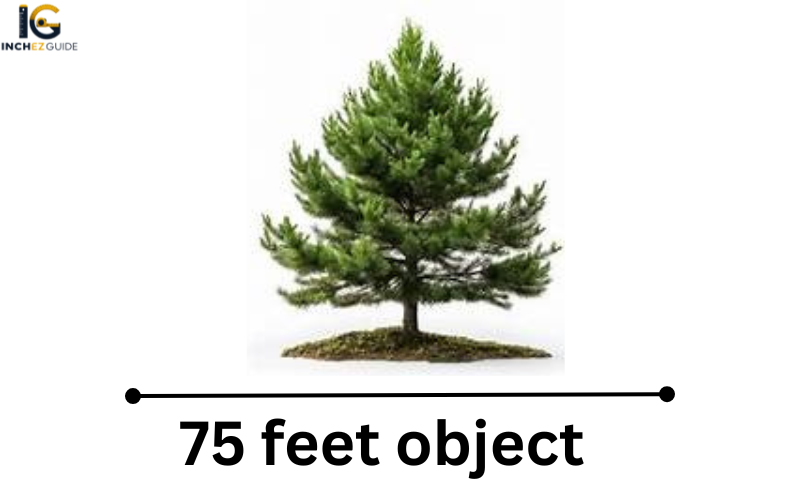
Nature provides another useful reference.
Many mature pine trees grow between 70 and 80 feet tall depending on the species and growing conditions.
These trees are commonly found in parks, forests, and large residential properties.
If you’ve ever stood next to a fully grown pine tree and looked toward the top, you’ve likely experienced what 75 feet looks like in real life.
The impressive height of these trees helps demonstrate how large this measurement actually is.
4. Two School Buses Parked End To End
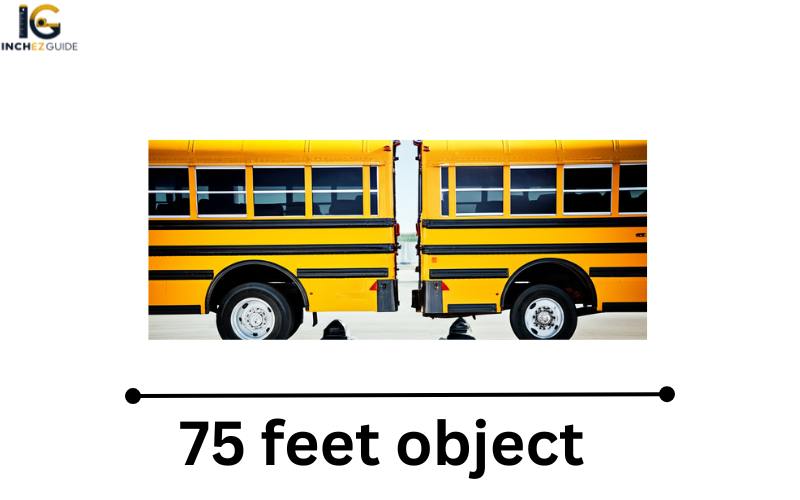
School buses are much larger than many people realize.
A standard school bus is typically between 35 and 40 feet long.
When two buses are parked nose-to-tail, their combined length approaches 75 feet.
Because school buses are familiar objects, this comparison makes it easy to picture the distance.
Imagine standing beside two full-sized buses lined up together. The total length would be very close to 75 feet.
5. A Large Luxury Yacht
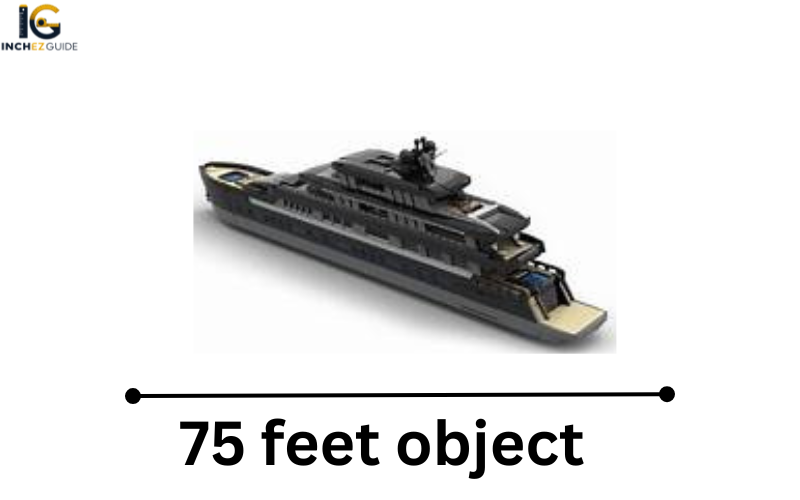
Many luxury yachts fall within the 70 to 80-foot range.
These impressive boats often feature:
- Multiple bedrooms
- Entertainment areas
- Large decks
- Dining spaces
Seeing a yacht of this size at a marina provides a great real-world example of what 75 feet looks like.
Compared to smaller recreational boats, a 75-foot yacht appears enormous and highlights the scale of this measurement.
6. Nearly Three Telephone Poles
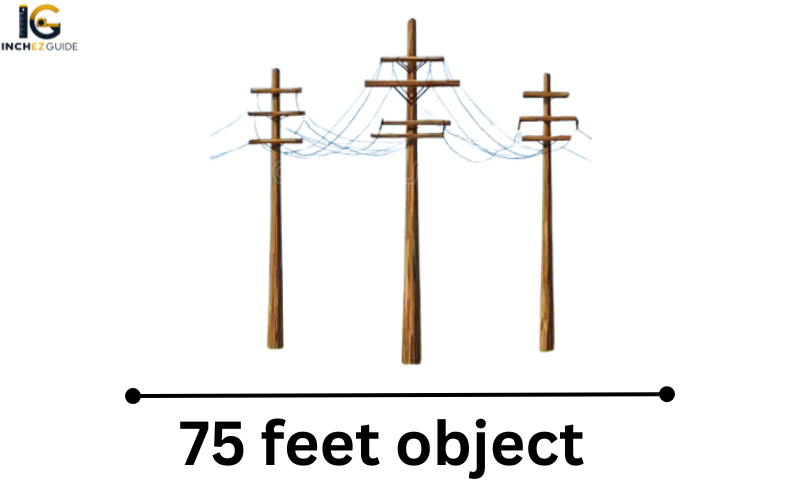
Telephone poles are common in cities, towns, and rural areas.
Most utility poles stand around 25 to 30 feet tall.
If you placed three average utility poles end-to-end, their combined length would be close to 75 feet.
Because these poles are so common, this comparison provides another practical way to estimate the distance.
The next time you walk down a street lined with utility poles, imagine the height of three poles combined.
7. Half Of A Basketball Court Plus Extra Space
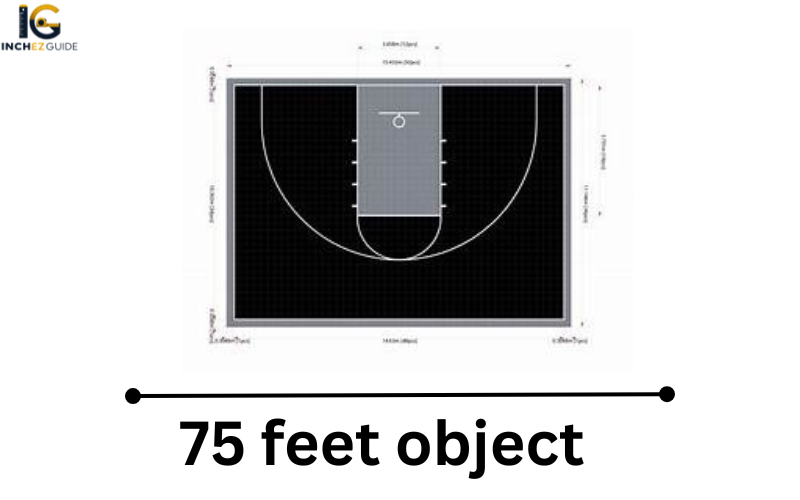
A regulation NBA basketball court measures 94 feet long.
Seventy-five feet covers most of the court length.
If you stood near one baseline and walked approximately four-fifths of the way to the opposite end, you would have traveled about 75 feet.
For anyone familiar with basketball courts, this comparison creates a very clear visual reference.
8. Seven Adult Giraffes Standing Nose To Tail
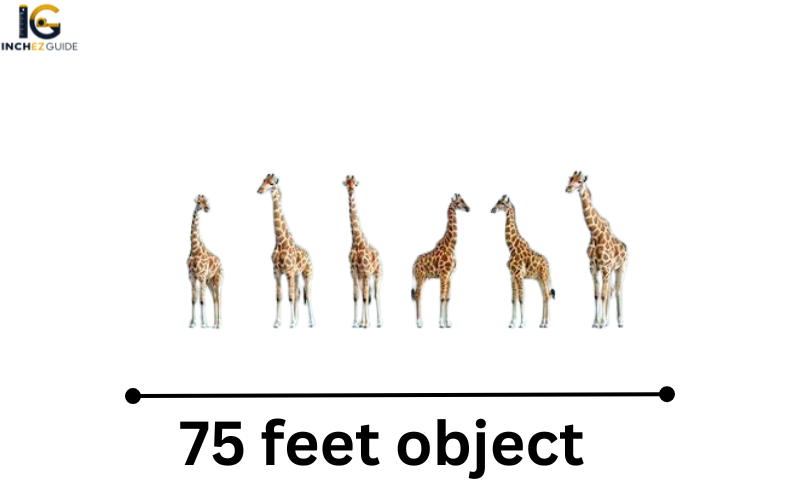
An adult giraffe measures roughly 10 to 11 feet in body length.
If seven giraffes stood in a perfectly straight line, their combined length would be close to 75 feet.
While not something people see every day, it creates a memorable image that helps reinforce the size.
This comparison also demonstrates how surprisingly large 75 feet really is.
Why Understanding 75 Feet Is Useful
Many people encounter measurements around 75 feet without realizing it.
Understanding the size can help with planning, estimating distances, and visualizing dimensions more accurately.
Property Measurements
Many residential lots include dimensions close to 75 feet.
Property owners often use this measurement when determining:
- Fence placement
- Driveway lengths
- Garden layouts
- Backyard sizes
Knowing what 75 feet looks like can make property planning much easier.
Construction Projects
Builders regularly work with measurements around this size.
Examples include:
- Building elevations
- Utility lines
- Retaining walls
- Foundation layouts
Accurately visualizing 75 feet can improve project planning and communication.
Landscaping
Landscapers frequently measure spaces that approach 75 feet in length.
Understanding the distance helps when planning:
- Tree placement
- Walkways
- Irrigation systems
- Decorative features
Event Planning
Large outdoor events often require measurements in this range.
Examples include:
- Tent installations
- Seating arrangements
- Stage setups
- Festival layouts
Knowing how much space 75 feet occupies can help organizers maximize available areas.
How Far Is 75 Feet To Walk?
Many people find it easier to understand distance through walking.
The average adult stride length is approximately 2.5 feet.
This means most adults can cover 75 feet in about 30 steps.
The next time you want to estimate 75 feet, simply count about 30 normal walking steps.
This method provides a quick and practical estimate without needing measuring tools.
How Does 75 Feet Compare To A House?
The average suburban home is usually between 40 and 60 feet wide.
A distance of 75 feet is longer than the width of many houses.
If you imagine a typical family home and extend its width by another 15 to 30 feet, you’ll have a good approximation of 75 feet.
This comparison is particularly useful for homeowners and property buyers.
How Does 75 Feet Compare To A Road?
Most traffic lanes are approximately 10 to 12 feet wide.
A distance of 75 feet equals roughly the width of six traffic lanes.
This means 75 feet is similar to crossing a moderately wide roadway.
Drivers, engineers, and city planners often work with distances in this range.
Feet To Meter Conversion Chart
Many countries use the metric system, making meter conversions useful.
| Feet | Meters |
| 25 feet | 7.62 m |
| 50 feet | 15.24 m |
| 75 feet | 22.86 m |
| 100 feet | 30.48 m |
| 150 feet | 45.72 m |
This conversion formula helps when working between imperial and metric measurements.
Common Things Measured Around 75 Feet
Many structures and objects are surprisingly close to this size.
Some examples include:
- Small apartment buildings
- Mature trees
- Boat docks
- Commercial signs
- Large cranes
- Event tents
- Warehouse sections
- Industrial equipment
Recognizing these examples helps create a better understanding of the measurement.
Is 75 Feet Considered Large?
For most everyday situations, yes.
Seventy-five feet is significantly longer than:
- Most rooms
- Most vehicles
- Most residential driveways
- Most swimming pools
Although it is not massive compared to skyscrapers or stadiums, it is still a substantial distance.
Most people underestimate how large 75 feet actually is until they compare it with familiar objects.
Easy Ways To Remember The Size Of 75 Feet
The easiest way to remember 75 feet is through visual references.
Think of:
- Five cars parked in a row
- A seven-story building
- Two school buses
- A mature pine tree
- Seven giraffes standing together
These comparisons create mental images that are much easier to remember than numbers alone.
FAQs
How many meters is 75 feet?
Seventy-five feet equals 22.86 meters.
How many inches are in 75 feet?
There are 900 inches in 75 feet.
How many cars equal 75 feet?
Approximately five average passenger cars parked bumper-to-bumper.
Is 75 feet taller than most houses?
Yes. Most houses are significantly shorter than 75 feet.
How many steps is 75 feet?
The average adult can walk 75 feet in approximately 30 steps.
See Also: How Big Is 65 Feet
Conclusion
Understanding how big 75 feet is becomes much easier when you compare it with real-world objects and structures. Whether you imagine five average cars parked in a row, a seven-story building, two school buses parked end-to-end, or a mature pine tree, these examples provide a clear picture of the measurement.
The next time you encounter a 75-foot measurement, you’ll be able to visualize it confidently and understand just how much space or height it represents in the real world.